Chronicles, sermon

Where Heaven and Earth Meet

In the South American country of Bolivia, there is a place called Salar de Uyuni. It is a 4,086 square mile salt flat set at an elevation of 11,995 feet above sea level in the Andes Mountains. During the rainy season, a few inches of water will stand on the flats creating a huge reflecting pool for the “low” hanging clouds. Photographers love the location, for it is where heaven and earth appear to meet. In 2 Chronicles 6:12-7:3, we read about Solomon’s prayer of dedication for the newly built temple in Jerusalem. To the ancient Israelites, as with many civilizations throughout history, the temple was regarded as the place where heaven and earth met.

Subscribe to receive email notification of new posts.

One thing we find in Solomon’s dedication of the temple is that the Father in heaven watches over us. Verse 14 tells us there is no one like him in heaven or on earth. Why? Because he keeps his covenant of loyal love with his servants. (Hesed could also be translated as “covenant love,” so the text could be read as, “you who keep your covenant of covenant love . . .”) God had kept his promise to his servant David (v. 15). Solomon says, “With your mouth you have promised” (that is, that David’s son would build the temple) “and with your hand you have fulfilled it” (today the temple stands complete and I am not dedicating it to you). In verse 16, Solomon essentially prays, “Now, LORD, do it again!” That is, God promised that David would never fail to have a successor on the throne (an everlasting kingdom), so Solomon asks that what God had previously said with his mouth would come to pass through God’s own guiding hand.

In verse 20, Solomon prays that God’s eyes would be open day and night on the temple so that he would hear the prayers directed there. Why would he say “eyes” for hearing instead of “ears”, especially when there is the eightfold repetition as part of each case example within Solomon’s prayer that God should “hear from heaven” and respond to the prayer? In fact, it is not until near the end of the prayer that Solomon finally says, “Now, my God, may your eyes be open and your ears attentive to the prayers offered in this place” (v. 40; italics mine). Possibly the reason the emphasis is upon the eyes of God when he hears from heaven is to be found in verse 30. “Deal with everyone according to all they do, since you know their hearts (for you alone know the human heart.” God alone can see the innermost intention and most secret thought. This is an action of the eyes, though certainly his ears are attentive as well.

What type of God is revealed by Solomon’s long list of case examples for the types of prayers that might be brought to this new temple? He is a God of loyal love (hesed, vv. 14, ), which is repeated three times in this passage (vv. 6:14, 42; 7:3). God is faithful because he is loyal to his covenant promises and those who keep his covenant. He forgives those who repent (v. 21). He judges justly the wicked and the innocent (v. 23). He rights injustice and releases the suffering from their sorrows (v. 25). He renews life (v. 27). He defeats illness and death (v. 29). He accepts all who seek him regardless of who they are or where they come from (v. 33). He upholds the righteous in their cause (v. 35). And he returns and restores the repentant wayward soul (vv. 37-38). In all these things, God cares for both the individual and the community.

A second thing we see in the text is that when we pray on earth, God hears us. Solomon sets the example for his people as well as for us. He is on a podium set up in the midst of his people, who he addresses prior to the passage we are considering. Solomon then turns toward the altar (towards the temple) and he humbles himself in front of all of his people by kneeling down and spreading out his hands to the heavens (vv. 12-13). Again, we will not look in depth at the various case examples Solomon gives in his prayer, but we will consider what they say about our actions when we pray to God. We are to confess our sins (v. 21). We should have integrity in our promises (vv. 22-23). (As Jesus told us, we should let our yes and no mean what we say, Matt 5:37.) We should learn from God the right ways to live (v. 27). We should pray for our nation and our community (vv. 28-29). We should fear God and walk in obedience to his commands (v. 31). We should expand the knowledge of the name of YHWH to all nations (v. 33). We should fight only when we are certain it is God who has called us to the fight and has ordained it (vv. 34-35). (There are lots of times, especially in today’s political climate, that we can claim to fight for God when he is sadly shaking his head at our behavior.)

Even in the midst of the dedication of the temple, we can see that Solomon demonstrates by example the need to confess our sins in prayer. Before the passage we are looking at (2 Chron 6:1-2), Solomon thinks to himself, “I have built a magnificent temple for [the LORD], a place for [him] to dwell forever.” He appears boastful and proud of his prowess in the great structure before him. Yet during his prayer (v. 18), Solomon has a notable change of heart. “But will God really dwell on earth with humans? The heavens, even the highest heavens, cannot contain you. How much less this temple I have built!” This is a confession that his temple is nothing in comparison to the grandeur of God himself. His temple is nothing more than a footstool at best for the great and powerful YHWH.

This leads us to the final idea in the text. The temple is the place that joins heaven and earth. Regardless of the culture or time, high places are often seen as the place where heaven and earth meet. Whether you look at Mount Sinai, where the people of Israel first met with God in the Exodus, the Acropolis in Athens, Greece, the Buddhist temples of Tibet, or even the various worship sites described as “high places” in the Old Testament. Mount Moriah (or Zion) was viewed in the same way. Such high places were where the earth rose up to meet the heavens. The temple Solomon was dedicating was the place on earth where God would “hear from heaven” the cries of people directing their prayers toward the temple. Though Solomon said God could not be contained in the temple, still the end of his prayer is an invocation calling upon God to inhabit the temple. YHWH is called upon to “arise” and come to this “resting place” (v. 41). This language was used in the ancient world for inviting gods to inhabit the images made for them in pagan temples. The invitation in 2 Chronicles, however, is not to an image but to the ark as the resting place, the footstool for God. When a monarch would ascend to his throne, he would arise to it and then rest upon it. So YHWH, the king of heaven and earth, is invited to reign through the temple.

In 2 Chronicles 7:1-3, we see the response of YHWH to this prayerful invitation to inhabit the temple. Fire falls from heaven and consumes the sacrifices on the altar. A dark cloud (5:13-6:1) or the glory of the LORD (7:1-2) fills the temple. This is imagery from the time of Moses and the wilderness. To look at but two examples, in Deuteronomy 5:22-24, we read of the first and dark cloud being upon Mount Sinai, which was called the glory of YHWH. In Leviticus 9:23-24, When Moses and Aaron leave the tent of meeting, the glory of YHWH appeared and fire came down to consume the altar sacrifice. God accepted the temple of Solomon the same way we established the covenant with Israel at Sinai and revealed himself to Moses at the tabernacle. But whereas the priests in Solomon’s day were not able to enter the temple because of the dark cloud of YHWH’s glory, Moses entered the darkness ascending Sinai (Exod 20:21) and Moses and Aaron were in the tabernacle before exiting with the appearance of God’s glory (Lev 9:23), thus the Chronicler seems to show either the greater holiness of Moses and Aaron compared to the temple priests or the greater the presence of YHWH in his temple than at Sinai and in the tabernacle. One thing that is the same between 2 Chron 7:3 and Lev 9:24 is that the people, upon seeing the glory of YHWH, fall face down and worship.

For Christians, Jesus Christ is the true temple and his Spirit in us makes us part of the temple of Christ. He is where heaven and earth met, for God reconciled heaven and earth through Christ (Col 1:20), for “all the fullness of the Deity lives in bodily form (Col 2:9). John 1:14 tells us that the Word became flesh and dwelt (literally, “tabernacled”) with us and that we have “seen his glory.” On the Mount of the Transfiguration, a cloud descended upon Jesus and his disciples as the voice from heaven spoke to the disciples with Jesus (Matt 17:5; Mark 9:7; Luke 9:34). Interestingly, where the cloud at Sinai and the temple was “dark,” Matthew describes the cloud of the transfiguration as “bright.” The dark mystery of God has been revealed in the glorious countenance of Jesus the Messiah. At Pentecost, tongues of fire fall upon each of the Apostles’ heads (for they are now the sacrifices) and they are “filled” with the Holy Spirit (Acts 2:3-4). And Paul tells us to be ever filled with the Holy Spirit (Eph 5:18), for it is the glory of YHWH filling his temple! We are to be the meeting of heaven and earth, bringing God’s presence into the dark corners of our world.

Look back at 2 Chronicles 6:41-42. Solomon prays that God will remember his great loyal love that was promised to his servant David and that God would not reject his anointed ones. (The noun is plural even though most English translators assume it is a typo and so translate it as singular, for Solomon.) But what if Solomon doesn’t mean just himself but the promise for sons of David to sit upon the throne to reign over the kingdom of God for all time? The New Testament on several occasions refers to Christians as “Sons of God” (e.g. Matt 5:9, though the NIV translates it as “children of God” to be inclusive, rather than the probably more appropriate “Sons and Daughters of God”), so we are all the anointed of God because we are members of the body of Christ. Not only are we part of this concluding prayer as the anointed ones, but we are also the priests “clothed in salvation” (and we are to clothe others in the salvation of Christ). We are also “those of loyal love” who rejoice in the goodness of God (singing praises to him and serving others in his name). One way we can be the temple of God and priests of his salvation is to pray for our community and our nation during this time of pandemic and electoral confusion. We should be healing the nations, not enflaming the masses.

We find in 2 Chronicles 6:29 that God will hear the prayer “of anyone among your people Israel.” We should be the voices raised up for healing and unity in our land. It says “anyone.” It doesn’t have to be religious leaders. It doesn’t have to be political leaders. You can be the instigator for a great revival of repentance and healing. This promise is specifically in connection with plague (v. 28). And so James tells us, “The prayer of a righteous person is powerful and effective” (Jas 5:13-16). Pray for members of your community who are affected by COVID-19. Pray for local, state, national, and world leaders to know how to govern in the midst of this pandemic. Pray for healthcare workers who are stretched to the limits with their obligations. Pray for the scientists who are working to develop multiple vaccines to bring an end to this struggle. Anyone can pray. Will you?

“Where Heaven and Earth Meet” (2 Chron 6:12-7:3)

Chronicles, sermon

Wise Enough to Ask Directions

Two Americans were sitting at a bus stop when a Swiss man pulled up in a car to ask directions. “Entschuldigung, können sie Deutsch sprechen?” he asked. The two Americans just stared at him. “Excusez-moi, parlez vous Francais?” he tried, but the two continued to stare. “Parlare Italiano?” No response. “Hablan Ustedes Español?” In discust at their blank stares, the Swiss man drove away to find help elsewhere. The first American turned to the second and said, “You know, maybe we should learn a second language.” “Why,” said the other. “That guy knew four languages and it didn’t do him no good!”

I am not good at asking directions. My wife Lucy is great at it, however. Any time we are going somewhere, she will ask the person on the phone for directions . . . and then hand the phone to me! Lucy, you see, is wise enough not only to ask for directions. She’s wise enough to know that she is bad at directions. In 2 Chronicles 1:1-13, David had died. Solomon was now the king. Chapter 1 tells us about the first act of this new king. In it, we find that Solomon was wise enough to know that he needed wisdom if he was to rule his people effectively.

The first thing we discover in the text is that wisdom begins with humility. Proverbs 11:2 tells us, “When pride comes, then comes disgrace, but with humility comes wisdom.” In Solomon’s first act as king, he gathers Israel’s leaders together and they accompany him to Gibeon, where the tabernacle from Moses’ wilderness wanderings still offered daily sacrifices. Solomon went there with the leaders to “inquire” of God (v. 5). The Hebrew word that this translates is the same word that was part of David’s advise to Solomon prior to David’s death, “If you seek God, he will be found by you” (1 Chron 28:9). So Solomon’s first action is to do as his father commanded.

That night, we are told God appeared to Solomon and told him to ask whatever he wanted and God would give it to him” (2 Chron 1:7). Solomon begins his response by noting that God had “shown great kindness [hesed]” to David (v. 8). Hesed is the covenant love of God that ensures the fulfillment of God’s promises to his people. Solomon says, because of your covenant love–the love that fulfills your promises–“let your promise to my father David be confirmed” (v. 9). The covenant or promise God made with David was twofold. First, David’s son would reign. Solomon is asking God to fulfill that promise. God has already made him king, but he asks God for wisdom to be able to govern well. He has come to the tabernacle to offer sacrifices with the leaders. He wants them to know of his desire to govern well and wants their prayers to be with him in that regard.

The other part of God’s covenant to David was that his son would build a temple. Solomon would build a temple. What is Solomon doing in his first act as king? He has gone to Gibeon to see the tabernacle that was build in the days of Moses. He has gone to inspect it and possibly to gain insights from it. Note that there is an emphasis about the tabernacle-builder, Bezalel (v. 5). God gave the plans to Moses, who was instructed to give those plans to Bezalel to build the tabernacle and all its accoutrements, such as the bronze altar on which sacrifices were made. So we were told earlier that God gave David plans for the temple, which Solomon would now build. Solomon had the designs of his father, but he has come to inquire of God before the tabernacle of Moses to make sure these designs conform with the will of God and not his father David.

When God says, “Ask whatever you want me to give you,” he is not some magical genie coming to grant any wish Solomon can conceive. This invitation is related to the teachings of Jesus. Jesus tells us to ask and it will be given (Matt 7:7-12), but this command has embedded within it a call to humility (if you are evil yet give good gifts to your children) and a call to serve others with whatever it is we request (do to others what you would have them do to you). And when Jesus commands us to ask “in his name,” we are told that what we ask for will be in order to do “the works I have been doing,” not for selfish motives or self-glorification, but to glorify the Father in the Son (John 14: 12-14). Or, as Proverbs 15:33 states, “Wisdom’s instruction is to fear the LORD, and humility comes before honor.”

A second lesson we find in the text is that wisdom is the most precious gift. Solomon is wise enough to know that he desperately needed wisdom! “The beginning of wisdom is this: Get wisdom. Though it costs all you have, get understanding” (Prov 4:7). This proverb can sound oxymoronic, but Solomon understood this great truth. What if we substituted something else for “wisdom”? How do you learn to play the piano, for instance. “The beginning of playing the piano is this: Play the piano.” That makes perfect sense to us. No one sits down and suddenly plays like Beethoven or Mozart. But if they sit down and play the piano, and play the piano, and play the piano . . . eventually they will truly be able to play the piano (especially better than the many who never take the time to sit down and play!).

God’s response to Solomon (v. 11) shows us that Solomon’s request for wisdom truly was the most precious of gifts. Wisdom is better than wealth (or investments or property or “stuff”–as in my favorite VeggieTales episode about “Stuff-mart”). Wisdom is better than honor (or power or glory or titles). Wisdom is better than victory (or as the text says, “the death of those who hate you” or vengeance). Wisdom is better than long life (or heath or heritage through progeny). God says, because you did not ask for any of these . . . I will also give these to you along with the wisdom you requested. It is like Jesus’ teaching, if we “see first God’s kingdom and his righteousness [that is, his wisdom], then all these things will be given to you as well” (Matt 6:33). In fact, if you read through Proverbs 3:13-18, it indicates that those who find wisdom also find wealth, honor, peace, and long life– for these things are but the overflow of wisdom. And the wisdom Solomon asked for wasn’t wisdom for himself or for his own sake. It was wisdom for others, to lead his people.

This leads to the final lesson in the text, wisdom has a purpose. The tendency when you read 2 Chronicles 1 is to focus on the request for wisdom in order to govern well. That is the most clearly stated reason Solomon gives. But recall that the promise to David was twofold. It was that David’s seed would reign, but it was also that he would build the temple. Note where Solomon goes before God gives him this gift. He has gone to the tabernacle to offer sacrifices in front of it on the bronze altar. Normally, this altar is either called the bronze altar or the altar of YHWH. But in this story, it is specifically called “Bezalel’s bronze altar” (v. 5). While he is there, he no doubt studies the construction of the tabernacles as well as the altar and other vessels. Underlying his prayer for wisdom was the concerns he had about his ability to be the temple-builder. David had given him the plans but could he accomplish the project? The Chronicler changes certain aspects of Solomon’s request to help us see this unspoken desire. In the 1 Kings version of the story, Solomon asks for a “discerning heart.” in 2 Chronicles, however, Solomon asks for “wisdom and knowledge.” The most likely reason for the change of wording is Exodus 35:30-35. The passage is Moses’ proclamation that YHWH had chosen Bezalel and filled him with the Spirit, “with wisdom . . . with knowledge” to accomplish the work of the tabernacle. So Solomon (or the Chronicler) is referencing this statement about Bezalel to emphasize that Solomon also would now have the wisdom to accomplish his calling as temple-builder. It is the unspoken reason for his request for wisdom. This is why the altar is called the altar of Bezalel. It is why in 2 Chronicles, Solomon almost immediately afterwards begins the building of the temple (2:1) where the writer of Kings first emphasizes several stories of the great wisdom of Solomon. In Chronicles, virtually all the stories of Solomon are of his work in building and dedicating the temple. The wisdom stories from Kings are either absent or relegate to the end of the Chronicler’s history.

Solomon’s request, then, is twofold. Help me rule over these people. Help me fulfill my charge to build the temple. The shift away from an emphasis on Solomon’s wisdom as his crowning glory (as the writer of Kings presents it) to immediately beginning the temple project (as in Chronicles) is the Chronicler’s way to say wisdom is not for yourself. Wisdom, at least the wisdom truly from God and for God, is for others. It has a purpose and that purpose is to serve the community. This is how James sees it in the New Testament. James tells us that Godly wisdom is humble, it is for others and not selfish, and it produces good fruit all around the wise one (3:13-18).

Yet another hint that the Chronicler is thinking of wisdom in terms of temple-building is the idiom he uses for the people of Israel. When Solomon asks for wisdom to rule, it is to rule “a people who are as numerous as the dust of the earth” (v. 9). The only time that phrase is used is in Genesis 28:14. It is made by God when he is speaking to Jacob (the man who later would be known as Israel). The phrase is in the middle of God’s promise to make the Abrahamic covenant pass through Jacob and his offspring, which included the promise to bless all nations through Abraham’s seed. The dust of the earth phrase is stated to Jacob at Bethel, the “house of God.” (The term “house” is the primary way the temple is referenced in the Davidic covenant.)

Ultimately, Solomon was simply the foreshadowing of the true seed of David, Jesus. Jesus’ calling was to be the great temple-builder. Through his death and resurrection, Jesus built the temple, the people of God who become the temple wherever they meet and go. Through the forgiveness of the cross and its expansion to all peoples of every tribe and tongue, Jesus blessed all the nations. We who follow Christ are called to get wisdom through humility in order to serve others. We are to build the temple through serving one another, encouraging and discipline one another in our faith, and comforting those who are in sorrow and helping those who are in need. We bless the nations–those outside our community–through our witness and aid, through our encouragement and comfort, and by addressing the injustices of society around us and improving the lives of all people in our communities.

Peter spoke of the Christian community in the language of the covenant with David, the covenant with Abraham, and the covenant with Israel through Moses. He says we are being built into a temple (Davidic promise). He says we are to bless all nations by living good lives among the non-believers (Abrahamic promise). He describes us as a kingdom of priests and a chosen people (Mosaic promise). We are chosen to serve (1 Pet 2:4-12).

Subscribe to receive email notification of new posts.

“Wise Enough to Ask Directions” (2 Chronicles 1:1-13)

Chronicles, sermon

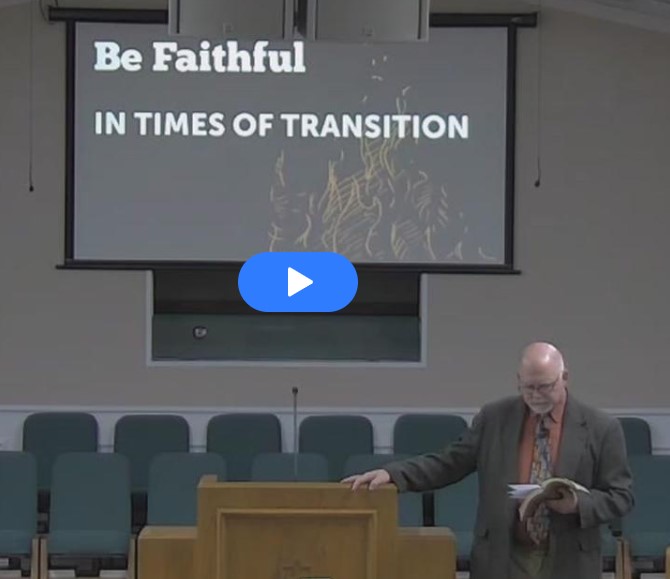
In Times of Transition

As David neared the end of his life, he knew he would not be the person to build the temple. He could have been like King Hezekiah, who, when told that a later generation would be conquered by the Babylonians, simply replied, “Well, at least there will be peace during my reign!” (2 Kings 20:19). So David could have thought, “Well, I will leave all those issues to Solomon.” Instead, we read in 1 Chronicles 22:5, “David said, ‘My son Solomon is young and inexperienced, and the house to be built for the Lord should be of great magnificence and fame and splendor in the sight of all the nations. Therefore I will make preparations for it.’ So David made extensive preparations before his death.”

David was like any father of an 8 year old boy who needed to build a pinewood derby race car. When the son shows up at the races, he has a sleek, well-lubricated, and properly weighted car because dad “showed” the son how to do it. Or the 12 year old girl whose entry into the science fair looks like a graduate research project (but she struggles to explain the project or the data without dad’s help). The Chronicler in chapter 22 tells us of David’s private instructions about Solomon. The focus of our devotional today, however, will be on David’s public presentation of Solomon to the Israelites as the next king (ch. 28). The two chapters contain much of the same information, though there are slight differences. David in chapter 28 is preparing the people for their new king. He is also preparing Solomon to build the temple for YHWH. A church in transition between pastorates can learn several lessons about how to prepare themselves for the coming of the new pastor.

First, we see that in times of transition, we should be faithful. David chose to be faithful even though he had been told “no.” In verses 2-3, he says the reason God told him he couldn’t build the temple was that he was a man of war and bloodshed. David goes on to recount his history as king (vv. 2-7) and gives a charge to the gathered Israelites (v. 8) and to Solomon(vv. 9-10). The Chronicler presents David as Moses in the book of Deuteronomy, giving speeches on God’s faithfulness during the Exodus and wilderness wanderings. Moses, though he was told he would not enter into the “good land” (v. 8 cf. Deut. 1:25, 35; 3:25; 4:21-22; 6:18; 8:7, 10; 9:6; 11:17), prepared the Israelites through his speeches and leadership in the book of Deuteronomy. So David had prepared for the building of the temple and was not explaining the future through a speech. Solomon is also presented as Joshua in this passage, for David and Moses both commission them before all Israel (v. 20 cf. Deut 31:7). Yet when David emphasizes the need to be faithful and obey the commands in order to remain in the good land, the Chronicler’s true audience to hear this injunction are his fellow returning exiles, who understood what it was to live in exile.

David was essentially saying, I am passing away. Do not place your hope in me. Hope instead in God. For it was God who chose the house of David (v. 4); God who chose Solomon to build the temple (vv. 5-7); God who gave the commandments that would lead to life and peace (v. 8); God who would remain when David was gone (v. 20). And it is God who is still at work today! Not that in verse 7, God says, “I will . . . if . . .” God is always faithful. Are we? But it is not just the leader who is to be faithful. All must be faithful. Verse 8, if it were written in Texan, would say, “I charge y’all . . .” (not “you” singular) “in the sight of all Israel.” The people were to keep the commands so they could possess the good land and give it as an inheritance to their descendants. This again is imagery from Deuteronomy.

While verse 8 was to all Israel, verses 9-10 are directed to Solomon, but they still apply to all. Solomon is to serve God with a whole heart and a willing mind, for God knows the intent and motives of each person. This should give us hope, for he knows if we meant well even if we fail in our acts. It should also be a warning, however, that God knows if our motives are selfish, even if we succeed and/or seem to take action for others. Therefore, we are to seek him, for he will be found by us. But, David warns, if we forsake God, he will reject us. This seeking and forsaking is not a reference to a single act or moment in time. David is speaking about lifelong trajectories, but each act can be a step in one direction or the other.

A second thing David notes is that we should be prepared. David was prepared. He gave Solomon detailed plans. Plans for the temple. Plans for the courts. Plans for the priests and the Levites. And David had already set aside funds for the project. In verse 19, David says he has written all of this because the Lord’s hand had been upon him. David is presented as Moses on Mt. Sinai in the Exodus story (Exod 25-30; esp. Exod 25:9). God gave Moses the plans for the tabernacle. So now God has given David the plans for the temple. Many members of the congregation have invested in the church for years. All of their work has been a preparation for the years to come. The Transition Team has led the congregation to prepare itself for the immediate future. The Pastor Search Committee is now at work preparing for the next pastorate. Some of us might not see the completion of the current work, but we must be faithful in the preparation, as David (who made all the plans but didn’t see the completion of the project).

The third thing David says is to be confident. In verses 5-6 and in verse 10, David tells Solomon that he is God’s choice for the one to build the temple. In verse 10, David tells Solomon to “be strong and do the work.” Later, in verse 20, David says to “be strong and courageous and do the work.” Solomon, like Joshua, is to be the next leader of the people. Both led the people into a new era (Joshua into the land; Solomon into a time of peace and temple-building). So David tells Solomon, like Moses told Joshua, to be strong and courageous (Deut 31:7). Again like Moses to Joshua, David told Solomon to not be afraid or to be discouraged (verse 20; cf. Deut 31:8). But Solomon is not simply like Joshua in this text. He is also like Bezalel, the builder of the tabernacle in Exodus. Moses gave the plans to Bezalel to build the tabernacle (Exod 38:22). So David has given Solomon the plans for the temple. Both Bezalel and Solomon are told to “do the work” (verses 10 and 20; cf. Exod 36:1-2).

Why does David tell Solomon to be strong and courageous, and especially who should he not be afraid or discourages? Because the LORD God would be with him. Not just any god, but YHWH, the God of the covenant promises would be with Solomon (v. 20). Not only is he the God of the covenant promises to Abraham, Isaac, and Jacob. Not only is he the God who made a covenant with Israel through Moses at Sinai. He is “my God” (i.e., David’s God). David says, the God who made a covenant with me that you, Solomon, will build the temple and reign after my death–it is that covenant God who will be with you. If he promised you would build the temple, what have you to fear? And so it is the same covenant God who is with us. And we have the sure promise from him of a new covenant through his Son, Jesus Christ.

Note that the Joshua language of verse 20 (be strong and courageous; do not fear or be discouraged) is modified with the promise “he will not fail you or forsake you until all the work for the service of the temple of the LORD is finished.” To us, that sounds like God will only be with Solomon for a while. But if we look more closely, we find that this is Bezalel language. Just as Bezalel led the workers to complete the tabernacle (Exod 36:1; 39:32), so Solomon’s priests, Levites, and skilled professionals (v. 21) will help him to accomplish the work of building the temple.

In many ways, David and Solomon (Moses and Bezalel, and Moses and Joshua) are like runners in a relay race. A relay team will only be successful if the runners are faithful to do their part in the leg of the race that they run; if the runners are prepared to give and to receive the exchange; and if they are confident that each member will do his or her part in running the race. The intent of the Chronicler is the same for us today as for his audience in his day. In the days ahead, we are called to be faithful, to be prepared, and to be confident, for God is not finished with us yet.

Subscribe to receive email notification of new posts.

“In Times of Transition” 1 Chronicles 28

Chronicles, sermon

God of the Unexpected

When I originally planned to preach this sermon, I found myself headed to the ER rather than to the church on that Sunday morning. It certainly was an unexpected trip. Fortunately, everything checked out and I was released the following day. A friend who pastors another church suggested I revise the sermon . . . or burn it! But God throughout the Bible is a God of the unexpected. Abraham never expected to have a child by Sarah when they were 100 and 99! The people standing on the banks of the sea expected to die at the hands of Pharaoh’s army. They never expected a wind would blow those waters apart. Even the story of Saul didn’t initially appear to be about a failed kingship. Instead, David became the king . . . which leads to the story of the unexpected that we will look at today, in 1 Chronicles 17.

In the text, we first find a God of the unexepected “nope.” First, we see in the text that we don’t speak for God. Nathan does just this in the text. In verse 2, Nathan doesn’t even hear the full plan of David. He hears enough to know it is about God and the ark and assumes that whatever David has “in mind, do it, for God is with you.” Why wouldn’t God be? It was for God. It was an act of devotion. It must be something good. We must beware, however. Even the most spiritual of us should never rely on the “obvious.” We must always inquire of the Lord.

Second, we learn we shouldn’t assume our plans are best. David assumed his plans were right. He wanted to build a temple. This was the most natural step in the ancient world. When an earthly king came to power, not only would he build himself a house but he would also build a house for the heavenly king who brought him to power. God had allowed David to bring the ark of the covenant to Jerusalem, after all. If he was pleased to have his ark dwell in the tent David had prepared, why not a splendid temple? But God told him that he was not the one to build a house for God (v. 4). The time is not yet. The person is not you. David assumed God wanted a house. David assumed God was not happy moving from place to place. But just as David’s first attempt to move the ark was not successful because it wasn’t done in the proper way, so now David’s plan to build a temple was not the right time nor was he the right person. God tells David that it is his son who will build a house of the name of YHWH.

Third, we must not lose sight of who serve whom. David was concerned that he had a palace but God only had a tent. But God indicates he was ok being a nomad. He had never complained about wandering with his people (vv. 5-6). God points out to David that the only reason David has a house of cedar is that God had taken the nomad (David, the shepherd) and made him the king. God had given him rest because God had enabled him to defeat his enemies (vv. 7-8). David’s desire with the temple was to make YHWH’s name great, but God says instead that he will make David’s name great. In the command of God to Nathan, God calls David a “servant” (v. 4). At the time, David was rather proud of his accomplishments and wanted to add temple-builder to his resume. But after God’s rebuke and covenant through Nathan, we see in David’s prayer that 10 times he calls himself “servant” (vv. 16-27), showing that he now understands he serves YHWH and not the other way round. It is God who gifts us with all that we have and all that we are. We receive his unmerited favor. As David says, “Who am I that you have brought me this far?” (v. 16). God tells David that he will set David’s seed over “my” house and “my” kingdom (v. 14). David is not to forget whose kingdom it is nor whose temple it will be. So we shouldn’t speak for God without seeking him in prayer. We shouldn’t assume to know the right time or person for even the most spiritual of activities. And we should never forget it is God who is God. Otherwise, we will encounter the unexpected “nope” of God.

But not only is God the God of the unexpected nope. He is also the God of the unexpected hope. God gave hope to the leader of his people. David wanted to build a house for God, but God says he will build a house for David (v. 10). He will give him a dynasty. His descendants will reign after him in Jerusalem. David also wanted to make God’s name great, but God says instead that he will make David’s name like the names of the greatest men on earth (v. 8). Though God removed his love from Saul, God will give David a dynasty (v. 13). His throne will be established forever and he will build the house for God (v. 12).

God also gave hope to the people. God made a people for himself. The Exodus is hinted at in Nathan’s oracle (v. 5) and is mentioned in David’s prayer (vv. 21-22). In verse 9, God promises to provide the people a “place” and to “plant” them, so that they won’t be disturbed nor oppressed by enemies (v. 9). Building a “place” is language for the temple. “Planting” is language of the Land. God is making his people holy in their land if they will only trust in him and obey him. So God’s promise is that they will no longer be nomads. Like David, they will have a settled life. It is only then, when the people are settled that God will accept the idea of having a permanent structure built for his ark. David asks in his prayer, “Who is like this people?” What makes them special? It is God who has redeemed them and brought them out, for what other nation can claim that their God created them rather than the people creating their gods (vv. 21-22)? If you want God’s name to be great, then be the people of God. Let him work through you.

God also gave hope for the future, and this hope brought joy to David. Who am I that you brought me this far, he asks? Then he adds, and if that were not enough, you have promised me a future (vv. 16-17)! In other words, he says, who am I that you have made my present great, yet you promise now a future that is even better?! God made David’s name like the most exalted on earth precisely because David humbled himself and was a servant of his LORD God. This promise of a future gave David the courage to pray (v. 25). The amazing thing about this story is that, when David is told his plans are to come to nothing, he doesn’t despair. He doesn’t complain to God. Instead, he find hope and this hope gives him courage to move forward into an unplanned future. And so David says, if the LORD blesses, he blesses forever (v. 27)!

Finally, God gave hope for eternity. The text gives us hope far beyond the lives of David and Solomon. The Chronicler is writing after the exile and return to Jerusalem. He has seen the temple destroyed. He has seen it rebuilt. He knows that the kingdom promised to David’s descendants did not last forever. Yet he saw that God was with his people in the exile and that he was still with them afterwards. Just as God had been with the people in the Exodus and after they entered into the land, so God was with them now. This gave the Chronicler hope that a Son of Dave would establish God’s kingdom just as the temple had been rebuilt. So, centuries in the future, the gospel writers upheld this same believe. There was a Son of David who would establish the Kingdom of God and reign over it forever and ever. The three Synoptic Gospels all focus on this idea of the Kingdom. The Fourth Gospel focuses instead on the one who would build the temple in three days. All understood that the life, death, resurrection, and ascension of Jesus to the right hand of God was the ultimate fulfillment of unexpected hope.

Subscribe to receive email notification of new posts.

“God of the Unexpected” 1 Chronicles 17 (audio)