Advent

Surrender to the God of the Possible

Tim Allen starred in two very different Christmas movies.  In The Santa Clause, he plays Scott Calvin.  A messenger tells Scott he must become the new Santa Claus.  Scott has 11 months to get his affairs in order before reporting for duty to the North Pole.  During this time, he comes to terms with the responsibility thrust upon him, ultimately surrendering—even embracing!—the call.  Ten years later, Allen starred in Christmas with the Kranks.  Luther Krank spends most of the movie resisting cultural expectations for the Christmas season, enduring the gossip and scorn of his neighbors because of his choices.

These two characters relate in different ways to the story of Mary.  She is called in Luke 1:26-38 to surrender to a life that will be filled with limitless love, wonder, and grace (like Scott Calvin), yet also darkened by rumors, gossip, and misunderstandings (like Luther Krank).  Mary asks the question the gossips will ask throughout her life: how can a virgin bear a child?  Do not be afraid, is Gabriel’s encouragement.  You have found the Lord’s favor.  With God, nothing is impossible.

In the presence of God there is always an element of danger, like being in the middle of a violent thunderstorm.  Out in the bare elements, the raw energy and power of the storm can be fearful, even deadly.  From the safety of our home, however, that same raw power fills us not with fear but with awe at the beauty of the lightening and roar of the thunder.  In the same way, those who abide in God’s grace are safe within the dangerous presence of the living God.  Mary humbly accepts the call to serve God, even though she cannot imagine the path it will take.  Will you?

Subscribe to receive email notification of new posts.

Bible, Christian living, current-events

Whose Land Is It, Anyway?

I recently saw a meme floating around social media: “Israel doesn’t occupy the land.  They OWN it. Gen 15:18-21.” There were multiple amens attached.  Certainly, the intent was to show support for Israel in response to the horrific attack on civilians by Hamas last October.  While there is a promise made in Genesis 15, it is curious that a verse referencing “everlasting” was not used, such as Genesis 13:15.  “All the land that you see I will give to you and your offspring forever.”  This promise to Abraham was restated to him (Gen 17:8), then confirmed to Isaac (Gen 26:3) and Jacob (Gen 35:12). 

The main problem with the meme, however, is that it assumes God’s promise was without condition.  That’s certainly the response of many to the meme: “God does not break his covenants;” “Truth!” “Of course!” “I stand with Israel.”  Yet the Bible itself does not support the idea that God gifted the land to Abraham’s descendants in perpetuity without condition.

Subscribe to receive email notification of new posts.

Before we consider these conditions, however, we must first address the wording of the meme.  God’s promises to the Patriarchs does not mean Israel “owns” the land.  God explicitly rejects such a concept in Leviticus 25:23.  “The land is mine and you reside in my land as foreigners and strangers.”  God is the only owner of the land.

God set conditions that the people must not sin but obey his commands in order to remain in the land (Deut 4:1; 5:33; 11:8-9; Josh 23:16; 2Chr 7:19-22; 33:7-9; Jer 11:5; 32:21-23).  Abraham, though a foreigner at the time, was told by God that the land was an everlasting possession for him and his descendants, and they must keep God’s covenant (Gen 17:8-9).  As Abraham was a foreigner in the land he possessed, so his later descendants were also foreigners.  Before entering the land, God warned Israel that if they did not keep his commands, the land would vomit them out as it did the Canaanites (Lev 18:25-28; 20:22).  By the monarchy’s end, God tells them, “You came and defiled my land and made my inheritance detestable” (Jer 2:7).  These detestable acts included idolatry (Deut 4:25-27; 11:16-17; 30:17-18, Josh 23:16; 1Ki 14:15-16; Jer 16:13-15) and unethical treatment of their fellow human beings.

If Israel wanted to remain in the land, they were to follow the way of justice, treating people fairly and without partiality (Deut 16:18-20).  They were not to mistreat the foreigner living among them, but were to treat them as native-born.  “Love them as yourself, for you were foreigners in Egypt,” God commands (Lev 19:33-34).  Israel was driven from the land because of violence and bloodshed (Ezek 7:23-25), because they did not care for the orphan and the poor (Jer 5:28). 

Many American Christians think they are called to unwavering support of Israel, regardless of the civilian casualty count.  Some even believe Israel is entitled to the whole land, to expel the Palestinians.  This, however, contradicts the statements above (love the foreigner, care for the orphan and poor).  I believe it also misreads the biblical story, as the New Testament authors continuously spiritualized the return to the land and the restoration of Israel, reading these as the gathering of Jews and Gentiles in Christ.  For instance, the writer to the Hebrews says we don’t look toward the earthly Jerusalem (Heb 12:22; 13:11-14), but join with the Hebrew faithful, who lived as foreigners and strangers on the earth . . . longing for a better country to come (Heb 11:13-16).  Remember, he’s writing to Hebraic Jews, saying the land and temple are no longer important.

Now God can give the land to whomever he wants, whether Israeli or Palestinian.  That is up to God.  But as Christians, we should not turn a blind eye to the suffering of Palestinians—both Christian and Muslim—who did not take part in nor condone October 7.  We should not encourage Israel to violate the command of God, to limit retribution to no more than an eye for an eye (Exod 21:23-25).  1,200 died in Israel that day; why is it okay for 35,000 civilians to die in Gaza? (Even if these deaths have been overreported by 90%, that is still 3 “eyes” to 1!)

Even if the restoration texts apply to the modern state of Israel, they are not living by these texts.  The return described by the prophets were of a people with the law written on their hearts (Jer 31:31-34) of flesh, filled with God’s Spirit to obey the commands (Ezek 11:14-21; 36:22-32), and wholeheartedly fearing the Lord (Jer 32:36-41).  Isaiah says, strangers would be united to those returning (Isa 14:1-2).  Ezekiel adds that they would treat the foreigner residing in the land as a native-born and give them an inheritance in the land in whatever tribe they resided (Ezek 47:21-23).  God the shepherd would gathers his lost sheep, caring for the weak and injured but destroying the sleek and strong (Ezek 34:15-16).  It would seem Israel should strive to find a way to leave in peace with their Palestinian neighbors, not take their land nor prosper at their expense, lest they themselves be destroyed. 

The modern secular state of Israel does not live the righteous life described within the Hebrew Bible.  In many ways, their response is far more like the people of Ezekiel’s own day than his vision of the future people of God.  Just after Jerusalem’s fall to Babylon, the attacked people say to themselves: “Abraham was only one man, yet he possessed the land.  But we are many; surely the land has been given to us as our possession” (Ezek 33:24).  Yet God tells them they violated his commands, worshiped idols, shed the blood of the innocent, defiled their neighbor’s wives, and relied on their own sword rather than on him.  “Should you then possess the land?” (Ezek 33:25-26) asks the God who was, and is, and is to come (Rev 1:8).

Subscribe to receive email notification of new posts.

sermon, Stories That Shape Our Life

Judged Yet Given Hope

In the 2000s, Colorado judge Paul Sacco noticed a number of people who appeared in his court because they played loud, blaring music were repeat offenders. Simply paying a fine was not a sufficient deterrent to change their minds about respecting their neighbors. So Sacco came up with a unique method of punishment. He would make the offenders sit in a room for an hour listening to very loud music from Barry Manilow, Mozart, opera, the Barney theme song, and even Boy George. The offenders would leave the room wondering, “Do You Really Want to Hurt Me?” and Sacco saw a dramatic drop in repeat offenders! Those who like classical music or soft rock would think the judgment held hope. We find that God provides hope in the midst of judgment as we consider the story of Noah (Ge 6-9).

Subscribe to receive email notification of new posts.

God’s Judgment Is Not out of Anger but from Regret

The story of Noah tells us God saw the wickedness of humans and how unjust they were to each other. Because of this, God would destroy all life on earth. Noah, however, was found to be righteous in his generation and so he, his family, and representative animals would be saved through this destruction in the ark Noah would build. In a podcast series looking at the anger of God in the Bible, Tim Mackie of the Bible Project noted the flood narrative never once mentions God being angry. The text only says God regretted making humans (6:6-7). God felt sorrow for what humanity was like and the role he played in creating humans, but he is not angry at them or demonstrating his wrath through the flood. As the Old Testament repeats often, God is slow to anger (e.g., Ex 34:6).

So when does God get angry in the Bible? When his people deny his call. Moses gave multiple excuses why he was not the right person to lead the Israelites out of their bondage in Egypt. Eventually, God became angry (Ex 4:14-17). God also gets angry when his people improperly challenge the leader he selected. Aaron and Miriam didn’t like Moses’ marriage to a Cushite woman. Instead of talking to Moses about this issue, they began to raise doubts among the Israelites about Moses’ calling as leader. They don’t question a legitimate leadership issue. They questioned his choice of a woman from an ethnicity of which they did not approve (Nu 12:6-10). His anger manifests when people misuse the gifts he gives them. Balaam has the gift of prophecy and attempts to use this gift against the Israelites to curse them (Nu 22:21-23). God is angry when people practice injustice against one another. His anger destroys the Egyptian army attacking the fleeing Israelites (Ex 15:7-11). Some of the first commands to Israel describe God’s anger at those who mistreat foreigners, widows, and orphans (Ex 22:21-24). God gets angry when his people misrepresent him to the world. God’s response to the Israelites’ golden calf was anger and to wipe them out, like in the flood story (Ex 32:7-10). God gets angry when his people don’t trust him to provide for their needs. The people refuse to enter the land because they fear they will be defeated (Dt 1:29-36). Cursed to wander in the wilderness, they complain about their hardships despite God’s provisions for them (Nu 11:1-3). God is also angry when his people consistently reject him and break his covenant (Dt 31:15-18).

So we see two broad categories that evoke the anger of God. First, God becomes angry when his people are not faithful representatives. God created humans to bear his image. God called Israel to faithfully bear his image after humans refused collectively do do so. When Israel doesn’t do this, God becomes angry with his own people whom he has called. Today, Christians are called to be image bearers of Christ, so God’s anger would be against us. Second, God becomes angry with any person who preys on the disadvantaged or is consistently unjust in their dealings with other humans. In the story of the flood, God could have been angry, as we are told that the world is filled with violence because humans are inclined to evil and their acts were wicked. But more so, God is sorry that he had made humans. So, God withdraws his hand and the order established in Genesis 1 devolves back to the initial chaos (Ps 104:29-30). All humans die because of the flood, save Noah and his family (Ge 7:22-23).

Even in Judgment, God Remembers, God Gives Hope

At the height of the chaotic destruction comes these words of hope, “But God remembered Noah” (Ge 8:1). God remembered he made a promise to Noah and those with him in the ark to rescue and redeem them. So the creative Spirit of Gen 1 begins once again to blow upon the waters as they begin to recede and order returns. Over and over, we see God not give up on his creation. God rescues them not because of who they are but because God remembers the promises he made to them. As God begins to destroy Sodom and Gomorrah, he remembers his promise to Abraham and rescues Lot and Lot’s family (Ge 19:29). When Rachel cries out in her barrenness, God remembers Rachel (Ge 30:22). Not only does he give her a son, that son becomes the salvation of his people and many others. When God hears the groaning and cries of the Israelites, he remembered his promise to Abraham, Isaac, and Jacob (Ex 2:24). So he called Moses to deliver them.

Even before the flood began, God provided hope within the judgment. We are told that “Noah found favor in the eyes of the Lord” (Ge 6:8). Among his generation, Noah was found to be righteous (Ge 6:9). That might not have been saying much, so we must always remember that God gives hope in judgment not because of who we are but because of who he is. Still, God makes a covenant with Noah to rescue him and those with him in the ark. God doesn’t base this on anything Noah has done or will do in the future. God promises to save him simply because of who God is (Ge 6:18). God did not only save Noah and his family. God did not only save the animals he identified as ritually clean. God saved some of every unclean animal as well! God saved more clean (seven pair) than unclean (one pair), but God saved some from every species nonetheless (Ge 7:1-2). This gives us hope for the nations that God is a gracious and compassionate God who does exceedingly more than we ask or imagine.

At the end of the story, there is hope. God also made a second covenant with Noah for all humans and all creatures. No matter how bad it gets, God promised he would never again remove the order that he had created to allow the world to return to the chaotic waters before creation (Ge 9:11). God promised to keep order in the cosmos, the regular rhythms of life that allow stability for growth and for planning (Ge 8:22). Throughout the latter part of the story, there is a lot of creation (Ge 1-2) language: creative wind/spirit (same Hebrew word) over the waters; command to be fruitful and multiply; humans as the image of God. The author is calling to mind the story as a renewal of creation, a second start.

God gave hope through a sign. God placed a rainbow in the sky as a sign of the covenant (Ge 9:12-17). Whenever it appeared during a rainstorm, it would be a reminder to God not to flood the world. It would be a promise to humans that there is hope that the rain will end. The rainbow reminds us that God can be trusted. Often in the stories of the Bible, God provides a sign of hope in the midst of judgment. When Eve is cursed, she is also promised that her offspring would crush the head of the serpent’s offspring (Ge 3:13). God tells Abraham he was wrong to jump ahead of God’s plans by having a child with Hagar, yet God gives both the sign of circumcision as witness to the covenant God made with Abraham (Ge 17:9-14). Though the child of David and Bathsheba dies because of David’s sins of rape and murder, out of that same union is born Solomon who becomes the bearer of the earlier covenant God made with David (2 Sam 12:24-25). In the midst of judgment, God offers us hope and calls us to trust him.

God’s Image Bearers Serve as Signs to Bring Hope

Christians are called to pray for the salvation of others and to serve God by bringing hope to the world by the way we live our lives as image bearers. We see the hope within judgment that God’s people can bring in the story of Abraham. God told him about the coming judgment on Sodom and Gomorrah. Abraham begins to question God about his righteousness, asking if God would surely “sweep away” (flood language) the righteous with the unrighteous. Would God spare the cities for 50 righteous people? God said he would. Would God spare them for 45? yes. For 40? yes. Abraham negotiates God down to 10 righteous people. Each time God says for the sake of the few, he would not destroy the many. Abraham appears satisfied with the answer and ends at ten. What if Abraham had continued the query down to five or even one? Would the cities not have been destroyed (Ge 18:23-33)? As believers, we are called to pray for the people around us. We must not pray the destruction of the wicked but for the life of the righteous remnant. Jesus, after all, told us to love our enemies and prayed for the forgiveness of those who crucified him. Even though Abraham stopped at ten and the cities were destroyed, we are told that God “remembered” Abraham–the call to not destroy the righteous with the unrighteous–as so he saved Lot and family (Ge 19:29).

In a similar story, Moses talks God out of destroying the Israelites. Because of their sin at the Golden Calf, God wanted to wipe them all out and start over with Moses. God wanted Moses to be the new Noah. Moses, however, called to God to remember his promises to Abraham, Isaac, and Jacob. God promised them that their descendants would inherit the land. God could not go back on his promises. God also needed to think about what the Egyptians would say if he destroyed Israel. If God’s purpose was for Israel to bear witness to the nations of the love of God, how would destroying them advance that cause (Ex 32:11-14)? The next day, Moses returns to God (with blood on his hands for killing some of the Israelites once he actually saw their wickedness!) and tells God that, if anyone has to die, take his life but spare Israel. He offers his life as atonement for the people’s sins, though God rejects the offer (Ex 32:30-34). Christians need to offer their own lives for the lives of others, as Paul did through his many afflictions to advance the gospel (2 Tim 2:8-10). Paul prayed that he would gladly accept God’s judgment if only the Jews would come to faith in Christ (Rom 9:1-5). May we be symbols of hope in a world destined for judgment.

Martin Luther King Jr., in a jail in Birmingham, wrote a letter to the white Christian pastors who published a letter to the editor about him. In the midst of a stirring judgment against their inaction and lack of support (even to the point of questioning his tactics or condemning his motives), King held out hope that some would see their error and even join in his cause for justice.

There was a time when the church was very powerful–in the time when the early Christians rejoiced at being deemed worthy to suffer for what they believed. In those days the church was not merely a thermometer that recorded the ideas and principles of popular opinion; it was a thermostat that transformed the mores of society. Whenever the early Christians entered a town, the people in power became disturbed and immediately sought to convict the Christians for being “disturbers of the peace” and “outside agitators.” But the Christians pressed on, in the conviction that they were “a colony of heaven,” called to obey God rather than man. Small in number, they were big in commitment. They were too God-intoxicated to be “astronomically intimidated.” By their effort and example they brought an end to such ancient evils as infanticide and gladiatorial contests. Things are different now. So often the contemporary church is a week, ineffectual voice with an uncertain sound. So often it is an archdefender of the status quo. Far from being disturbed by the presence of the church, the power structure of the average community is consoled by the church’s silent–and often even vocal–sanction of things as they are.

But the judgment of God is upon the church as never before. If today’s church does not recapture the sacrificial spirit of the early church, it will lose its authenticity, forfeit the loyalty of millions, and be dismissed as an irrelevant social club with no meaning for the twentieth century. I meet young people whose disappointment with the church has turned into outright disgust.

Martin Luther King Jr., “Letter from a Birmingham Jail”

As the body of Christ, we must pray for the salvation and protection of our communities. We are a sign of hope but we also must speak judgment about the injustice around us. We are the community saved within the ark of Christ’s sacrifice, but unlike Noah, we are able to captain lifeboats that seek out and save the lost from among our family, our neighbors, and even our enemies. When we speak judgment, it must be the work of the Spirit guiding us and not our own spirits and thoughts judging others. But far more often and far more importantly, we are called to bear the image of Christ, to be signs of hope that bring healing and forgiveness to our communities, our nation, and our world.

Subscribe to receive email notifications of new posts.

Judged Yet Given Hope (Ge 6-9)

sermon, Stories That Shape Our Life

Exiled but Not Forgotten

2020 is in the rearview mirror, but she won’t let go. Civil unrest, political divisions, and COVID restrictions–many people feel as if they are exiles even if they are living and working in their own homes. Others wonder if God has forgotten about them, about us. The violence we’ve seen in the news, the anger and frustration that we see on social media, these are all issues rooted in the story of the Garden of Eden (Ge 2:5-3:24).

In Hebrew, the author’s description of the garden tells us “the tree of life [was] in the middle of the garden and the tree of the knowledge of good and evil” (2:9). This descriptive imagery symbolizes both God’s ideal plan for humanity as well as our present reality, the result of choosing our way over God’s plan. The tree of life’s central location in the garden represents God’s paramount goal for humanity was life in all its wonder and fulness. That was the heart of the divine project. The other tree, the tree of the knowledge of good and evil, the tree from which God warned humans not to eat, was nearby the tree of life, but it was off-center. And so, just as the tree was not centered in the garden, we read that as soon as the humans eat its fruit (3:6), every area of their lives becomes askew and off-balance. They are no longer comfortable with who they are (e.g., they realize they are naked, 3:7). Their relationship with one another is fractured (e.g., the male blames the female, 3:12, and their intimacy is so estranged that they can no longer share a single name, 3:20). They now struggle with the creation itself (e.g., the woman’s pains in childbirth increase, 3:16, and the man’s work becomes toilsome due to thorns and thistles, 3:17-19) and even their relationship with God is impacted (e.g., they hide from God, 3:8).

Because their lives are now out of harmony with heaven and earth, God no longer wants the humans to eat from the tree of life. God’s will for them–life–has not changed. Rather, it is the circumstances of the moment that have changed. If the humans now eat from the tree of life, in their present condition, they will live forever in discord with God, other humans, creation, and even their own selves. So God exiles them from the garden (3:23-24) as an act of judgment, but even more as an act of love and compassion. Though humans had rejected God’s plan for their own way, the story emphasizes God’s continued care for his human creatures. We see his concern prior to their judgment and exile, when God calls out and asks them where they are, knowing that they are hiding. He asks them how they know they are naked, have they eaten from the tree, what have they done, all the while knowing exactly what had occurred. In this way God offered them opportunities to confess their sin and reconcile their relationship with him (opportunities they unfortunately do not fully embrace). After pronouncing judgment but before exiling them, God sees they are uncomfortable with their nakedness. God could have reprimanded them for not accepting themselves as he had created them. Instead, in an accommodating act of service, he lovingly removes their tattered fig-leafs and provides them with more suitable attire (3:21). Even after they are sent into exile, God does not forget them nor does he give up on his plan for them–life. The remainder of the Bible is the story of God’s reclamation project for his lost creation, his effort to redeem them from their exile. Humans, however, in the midst of our exile often miss the beauty of the Biblical story and misunderstand God’s plan to restore his creation to life everlasting.

Subscribe to receive email notification of new posts.

First, we misunderstand the story of exile when we don’t realize it is a story about forgiveness. After the garden story, we read about the sons of Adam and Eve. Cain kills his younger brother Abel, so God punishes him. Cain will be exiled to a nomadic life of wandering in the East. Cain protests that this curse is too much to bear, that without the protection of his family clan others will surely kill him. To show God’s continued concern, that exile does not mean we are forgotten, God places his mark of protection on Cain and promises that anyone who kills Cain will suffer vengeance seven times over (Ge 4:11-16). Within four generations, however, God’s offer of grace to Cain is misunderstood. The compassionate protection of God becomes the privileged right of humans. God’s mercy is now a man’s threat. Lamech boasts to his wives that he had killed a man. If Cain was avenged seven times then Lamech would be avenged seventy-seven times (Ge 4:23-24)!

In stark contrast, Jesus taught his disciples a radically different way. His followers should be like God, dispensing undeserved mercy and demonstrating unconditional love. When Peter asked Jesus how many times we should forgive someone when they wrong us, Peter thought a reasonable number would be seven times. Jesus, however, rejected this. Not seven times, Jesus said, but seventy-seven times. And so Jesus inverted the Cain and Lamech story. The story of increasing violence and vengeance was to be replaced with a new story of unlimited forgiveness despite wrongs incurred (Mt 18:21-22). As Christians, we bear the mark of Christ, a mark that challenges us to love our enemies and pray for those who persecute us (Mt 5:44).

Second, we misunderstand the story of exile when we don’t understand it is a story about inclusion. Later in the Old Testament story, the northern kingdom of Israel was conquered by the Assyrian Empire, who exiled conquered people groups by scattering them throughout their empire. Even later still, the southern kingdom of Judah was also conquered, this time by the Babylonian Empire, who sent the Jews into exiled communities throughout Babylon. Yet God did not forget the Jews in exile. The opening vision of Ezekiel (Eze 1:4-28) describes a mobile throne on which God comes from Jerusalem to be with his people in their exile. And Isaiah prophesied that God would go through his people’s trials with them and proclaimed the hope that God would ultimately bring them back from the east, west, north and south (Is 43:2-7).

The Jews did return from their exile in Babylon, but the “lost tribes” of Israel scattered among the nations did not return. Over the centuries, hope developed among the Jews that the the tribes would return when Messiah came. Jesus took this nationalistic hope and re-centered it back onto God’s inclusive purposes. In Luke’s gospel, Jesus spoke of people from east, west, north, and south (an allusion to Isaiah’s vision) coming to sit alongside Abraham, Isaac, Jacob, and the prophets at a feast in the Kingdom of God (Lk 13:28-29). Since Jesus proclaimed right before this that the entrance to the kingdom is narrow (Lk 13:23-24), one might think the returning ones were the lost tribes of Israel. But Jesus tells his Jewish audience that many of them would weep because they would find themselves thrown out of the kingdom. Matthew clarifies the identity of these new arrivals from east and west by placing this statement by Jesus immediately after the story of a Roman Centurion whom Jesus said had faith greater than anyone he had encountered in all Israel (Mt 8:8-13). That is, the Roman would be at the feast. So the promise of people returning to the kingdom feast was not a statement about the lost tribes of Israel, or not just them. It was the return of the lost tribes of Adam; that is, a return from exile open to all nations and people. This hope was embedded in God’s covenant with Abraham. His seed would bless all nations (Ge 22:18). It was also the fuller understanding of Isaiah’s own prophecy.

Even in the narratives of the Old Testament we see God’s unfolding plan has an inclusive strand even as its primary focus was momentarily on Abraham and his descendants. As the story of Abraham’s family unfolds, we see family lines break off along the way, yet occasionally descendants from these other lines wander back into the grand narrative. Lot separates from his uncle Abraham. His descendants become the Moabites. Generations later, a Moabite named Ruth re-enters the story and becomes the ancestor of both King David and Jesus the Messiah (Mt 1:5). When twins are born to Abraham’s son Isaac, the covenant continues through the younger, Jacob, and not the older, Esau. Yet Esau’s descendants, the Edomites, apparently produce the early form of the Old Testament book of Job. The setting of Job is the land of Uz, which Lamentations 4:21 identifies with the land of Edom. Job, the righteous man who suffered greatly, was an Edomite. After Sarah’s death, Abraham marries a second time and one of his second wife’s sons is Midian. Generations later, we meet a priest of Midian named Jethro, who becomes Moses’ father-in-law and serves as a wise counselor to Moses (Ex 18). Even the accursed Canaanites, the people to be driven from the land by Joshua and the Israelites, were not completely exiled from the story. Rahab, a Canaanite prostitute, helped Israel conquer Jericho and became an ancestor of both David and Jesus (Mt 1:5). These are just a few of the side stories in the Bible that hint to us the plan of God was not exclusive to the Jews but included all the nations.

Finally, we misunderstand the story of exile when we don’t recognize it is a story about reconciliation. Jacob, the one through whom the promises of Abraham were to pass, stole his older brother’s birthright and blessing. Because of his actions, Jacob ended up in exile, sent away by his parents to live with his mother’s family in order to avoid his brother’s wrath. Yet God did not forget Jacob in exile. He promised to bless him and Jacob was blessed. Eventually, Jacob began the journey out of exile back to his homeland. Soon he received a report that his brother Esau was coming to meet him with a contingent of men. The reader wonders if we are about to experience another Cain and Abel story. Will the older brother again kill the younger? Instead, we read that as Jacob repeatedly bows down in submission as he approaches his brother, Esau runs to cover the remaining ground between them. Esau then throws his arms around Jacob’s neck, not in anger but in joy, and he kisses him. Then they both weep (Ge 33:4). Esau tells Jacob he had also been blessed by God. He had long since put aside his anger at his brother for his deceptive actions and Esau longed to be reconciled to his estranged brother. Now, God had truly blessed him for Jacob was home (Ge 33:9).

The story of Jacob and Esau is likely the basis for Jesus’ Parable of the Prodigal Son (Lk 15:11-32), though the father takes the place of Esau in the parable. Like Esau, the father runs to meet the returning exile, throws his arms around him, and kisses him (Lk 15:20). It is easy to see that the story emphasizes the importance for exiles to desire reconciliation with God, our Father. But Jesus also wanted us to seek reconciliation with other humans. There is an older brother in Jesus’ parable that we sometimes overlook. “But his older brother was in the field” Jesus continues the story (Lk15:25). How will this brother respond? Will he respond like Cain, who killed his brother “in the field” (Ge 3:8)? Or will he respond in reconciliation like Esau (and like the father in the parable)? The older brother’s response was somewhere in between, though closer to Cain’s response than Esau’s. He was angry his younger brother had left while he remained behind (in his words) to “slave” for his father (Lk 15:29). He was also angry that his father threw a party for this wanderer but never showed such honor to him for his continued work in his father’s home and fields.

Jesus’ message to the Jews hearing this parable was that they shouldn’t be like the older brother. Though they were God’s servants longer, as Abraham’s descendants, they should welcome these new members of God’s family, the Gentiles and other “sinners” they currently looked down on. Instead of rejection and anger, they should be like Esau, who welcomed back his younger brother Israel/Jacob. Today, Christians stand in the place of Jesus’ Jewish audience then. Will we be like the prodigal’s older brother, demanding God do things our way and angry when God blesses others we don’t think deserve his grace? Or will we be like Jacob’s older brother, happy with what God has given us and rejoicing to accept the returning lost members of our family?

We are all exiles in this world but we are called to be God’s witnesses through the empowering Spirit of Christ. Peter tells us that, though we are exiles, we should live such good lives that even those who falsely accuse us cannot help but glorify God because of what they see. We are also called as exiles to respect the government God places over us (1Pe 2:11-15). The war we fight is against sinful desires and spiritual powers, not against flesh and blood (Eph 6:12). While we are free, we are told we must not abuse this freedom by using it as an excuse to do evil. Instead, we are slaves to God and so servants to those made in God’s image (1Pe 2:16).

During the height of the Civil War, when many Northerners grew weary of the conflict and were ready to cede the Southern states, Edward Everett Hale wrote a short story to rekindle the imagination as to why a Union of States was so important. His short story was called The Man without a Country. The main character in the fictional story joined Aaron Burr’s insurrection in the West and was subsequently captured and court-martialed. During his trial, the young man foolishly asserted, “D—-m the United States! I wish I may never hear of the United States again!” The judge’s response was that he would indeed never hear again the name of the United States nor would he see her. The young man was reprimanded to the custody of the Navy and until his death (over five decades later) the man with no country was transferred from ship to ship while remaining at sea. Crews were given orders never to speak about the United States in his presence and he was never allowed to come within sight of the American shore. On the occasion his ship put to shore, it was always a distant one. Through the years he earned the respect of the officers and sailors with whom he sailed. At the end of his life, he was graced by a single final conversation about the nation from which he was exiled, during which he asked numerous questions about its growth and condition. The love he expressed to his companion was so strong that the friend could not bring himself to tell the man about the division and decimation brought upon the States through the then-current Civil War. At the man’s death, a slip of paper was found marking a verse in the Bible, “They desire a country, even a heavenly: where God is not ashamed to be called their God: for he hath prepared for them a city” (He 11:16, KJV). He asked to be buried at sea but requested a stone be set up either at the site of his rebellion or his trial which read, “In memory of Philip Nolan, Lieutenant in the Army of the United States. He loved his country as no other man has loved her; but no man deserved less at her hands.” Though an exile, he developed a deep respect and love for the country he never heard of or saw again and he truly learned the meaning of forgiveness, inclusion, and reconciliation.

We are called to trust God in exile. This world in its present fallen condition is not our home. As exiles, we are to join in God’s inclusive plan for forgiveness and reconciliation centered in the life and reign of Jesus Christ our Lord. We may be in exile, but we are not forgotten. God is with us, and he will lead us home.

Subscribe to receive email notification of new posts.

Exiled but Not Forgotten (Gen 3:1-24)

psalms, sermon

In the Darkness of Despair

Gloom, despair, and agony on me.
Deep, Dark depression, excessive misery!
If it weren’t for bad luck, I’d have no luck at all!
Gloom, despair, and agony on me.

This farcical song of lament was popular on the television show Hee Haw while I was a kid in the 1970s. It reflects, however, the element of lament that is the most popular form of literature in the book of Psalms. There are times we cry out to God in desperation. Psalm 13 is one such passage.

The psalmist is dejected and confused in his time of despair. “How long?” he asks God four times. When will this end? As humans, we all have external struggles and troubles of life that begin to cause internal doubts as we wrestle with conflicting thoughts and eventually prompt spiritual concern about the presence of God and his lack of response to our prayers. The psalmist focuses on all three issues (external, internal, spiritual), but he inverts them and begins first and foremost with a prayerful address to God. His prayer is about his dread of God’s absence, his anxiety created by conflicting thoughts and emotions, and his fear of his enemy’s triumph. In our minds we can package these into nice little groupings of “external,” “internal,” and “spiritual,” but in reality, we are human. These fears and concerns are all intertwined and build upon and incite one another.

Second, the psalmist desperately cries out to God. It would be easy to claim God has abandoned us. If he is all loving, why does he allow my suffering? If he is just, why does he allow my enemy to overpower me? But we live in a broken and fallen world, not the fantasy of a thirty minute sitcom. Some struggles and problems are not quickly resolved. But the psalmist prays in the midst of his darkness. “How long?” he asks. “Look at me!” he demands. “Respond to me!” he pleads. He will not give up on God. He will not deny God but confesses his dependence of the Lord. Whether he overcomes his enemy or is destroyed, God has been and will remain, “my God!”

Finally, the psalmist is determined to be committed. There is a shift in the psalm to an emphasis on trusting God in the midst of the storm. He will trust in God’s steadfast love–the love evidenced time and again through the history of the Israelite people. He will rejoice in God’s salvation even when he doesn’t presently see it. He will sing of the bounty God has blessed him with even when it isn’t in all the fullness he would wish.

Because of God’s faithfulness in the past, the psalmist refuses to accept a present apart from God or imagine the future apart from God’s salvation. Martin Luther said of Psalm 13 that it is “the state in which hope despairs, and yet despair hopes at the same time; and all that lives is ‘the groaning that cannot be uttered’ wherewith the Holy Spirit makes intercession for us, brooding over the waters shrouded in darkness.” Or, as the man in desperation cried out to Jesus, “I do believe; help me overcome my unbelief!” (Mk 9:24, NIV). In the midst of desperation, we have hope because Christ. On the cross he felt abandoned by God yet he entrusted his spirit to his Father; he felt betrayed by the humans he had come to save but asked his Father to forgive them. And he trusted his Father would raise him back to life even when all hope seemed lost. So our hope in in Christ. “For we who are alive are always being given over to death for Jesus’ sake, so that his life may also be revealed in our mortal body” (2 Cor 4:11, NIV).

19th Century preacher Charles Spurgeon and a friend, walking through the English countryside, came across a barn and stood looking at the weather vane on top. It read “God is Love.” Spurgeon said he did not think it was appropriate to put such a statement on a weather vane, for the vane is quite changeable but God’s love is unchanging. His friend, however, told him he misunderstood the meaning of the farmer. The weather vane stated a truth: no matter which way the wind might blow, God . . . IS . . . love! It doesn’t matter if a cool breeze indicates a good season or happy time, or hot winds bring desolation or a dry period, or a ferocious gale points toward a chaotic and stormy period in your life. God is love, and Christ is our guide pointing the way through.

Subscribe to receive email notifications of new posts

Sermon link
Psalm 13 “In the Darkness of Despair”
sermon

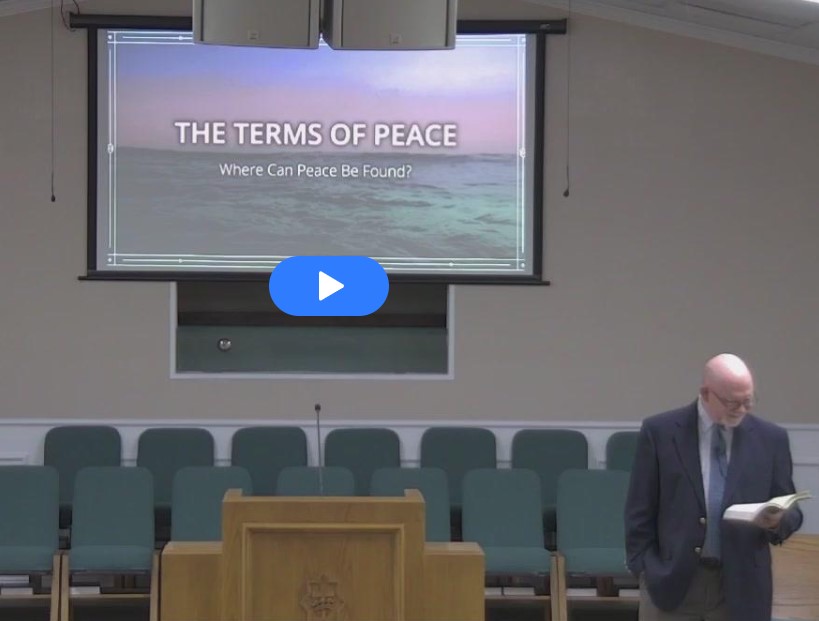
Finding Peace in a Troubled World

The year 2020 has been turbulent, to say the least. No matter where you live, there is something happening. The chaotic confusion brought on by the sudden emergence of a global pandemic. Fear of learning you or a loved one is COVID-19 positive. Concerns over the economic instability created by lock-downs and partial business closures. The vanishing toilet paper! Political arguments about whether or not to wear a mask. In the midst of this, unfortunate acts of racial injustice have resulted in both peaceful protests and, unfortunately, riots and other violent acts.

Americans may think I am only talking about their country. But the turmoil over COVID itself and the proper response to it are ongoing worldwide. George Floyd’s death has ignited questions about justice in Israel over the treatment of Ethiopian Jews and Palestinians and in Australia over Aboriginal deaths in police custody. As always, there is also political unrest. China is cracking down on Hong Kong, provoking border skirmishes with India, and threatening Christian churches they cannot reopen unless they teach loyalty to the Party. Then there’s the locusts . . . in Kenya . . . in Pakistan. (In case you forgot about the ecological troubles.)

And so the question arises, how can we find peace in such a troubled world? Where can it be found. Isaiah also wrestled with this quest for peace in chapter 57 verses 15-21. He describes life apart from God as a tossing sea full of mire and mud. But he tells us there is a God of peace sitting above this troubled world, just as Genesis 1 tells us the Spirit of God hovered over the chaotic waters. Genesis 1 “ends” on day 7, but God has never stopped his work of bringing order and stability out of chaos and turmoil. Though he could destroy us in an instant, he patiently bears with us in our sin and injustice, prompting us forward. Calling us to repentance.

God offers peace to those far away and to those near to him. He offers healing and comfort, if we but accept it. So how do we find this peace he offers? Isaiah tells us that God not only lives in a high and lofty place far above the turmoil, but–amazingly–God also chooses to live in the midst of the turmoil, with those who are contrite and lowly in spirit. To know God, you must humble yourself and give your fears and insecurities over to God. To know peace, you must first be contrite and seek forgiveness for your sins and prejudicial thoughts. Then, you can find peace in the midst of chaos, like Betty and Curtis Tarpley. Married for 53 years, they both contracted COVID and died on June 18 within an hour of each other. Yet despite the illness, they died hand in hand, the image of peace, grace, and love in the midst of troubled times.

Subscribe to receive email notifications of new posts

Sermon: Where Can Peace Be Found? Isaiah 57:15-21