 When I asked the grandchildren what they wanted me to share about Bluefford, the first thing they often mentioned was not stories but sayings. You might call them “Blueffordisms.” For example, whenever Bluefford was ready to go but you weren’t, he would say he was like “a dollar waiting on a nickel.” If something was really good, it was “prettier than a speckled birddog pup.” I’ll admit, I wasn’t used to Blueffordisms at first and feared for some of the kids’ lives whenever I heard him say he was going to “knock a knot on your head.” And you’ll often hear many of the grandkids exclaim, “Dad-gum!” as much in honor of Bluefford as in genuine surprise or exacerbation.
To his grandkids,
Bluefford is better known as “Deeda.” Supposedly, Bluefford and Katie decided to let the first grandchild determine their names. Jeff Grimes had trouble saying Grandpa; it came out Deeda, so the name stuck. Amazingly, however, Jeff was about to say “Grandy” even though “Gr” is a sound that most children do not master until age 6. That, or else Katie didn’t play by the rules as well as Bluefford.
Several of the kids shared Texas A&M stories about Bluefford. Scottie told me that as a child Deeda took her to an Aggie football game. It was November and it poured down rain the whole time, yet her Deeda made her stand in the rain the entire game, even though some around them left. Scottie was sick for a week afterward! Joseph recalled fondly that his Deeda not only gave him a place to live while attending A&M but purchased tickets for him to make sure he attended football games. In fact, Bluefford bled maroon so much that my son, Christian, while watching an LSU-A&M game on television as a young boy felt the need to root for A&M so as not to upset his Deeda—despite the fact that Bluefford wasn’t in the room and Christian’s other grandfather (who was in the room) had been part of LSU’s 1958 national championship team!
Bluefford loved to go grocery shopping. There was no such thing as a “quick trip” to the store for him. Since Scottie lived in College Station, she often went with him on these expeditions. When she was little, she loved it because she was fascinated that everyone in the store knew Bluefford’s name. She felt like a celebrity. As she got older, however, she began to try to hurry her Deeda by throwing items in the basket and trying to stop him from picking up an extra five gallons of ice cream because it was on sale. Katie and Lucy used to send me to the store with Bluefford, honestly believing I could somehow make it a quick trip! While I could not, I did learn from those trips how to pick ripe cantaloupe as well as other melons, fruits, and vegetables.
Many stories were about the outdoors. Bluefford grew up on a dairy during the Depression and had to hunt and fish for food. So the worst criticism a grandchild could receive was when Deeda called him or her a “town boy” or “town girl” for something wrong, whether fishing, hunting, horseback riding, or just working around the farm or house. Joseph and John David said their favorite memories were all the fishing trips with Deeda, which were too numerous to count. Jason said that Bluefford used to try to get the kids to behave in the car during trips by telling them to keep an eye out for wild turkey or deer. One day, they say was turkey fly across the road and told them to keep an eye out for more wildlife. A little later, Jarrett said he saw a deer. Deeda stopped the car in a hurry and asked where Jarrett had seen the deer, wanting to get a glimpse of it. Jarrett said it was jumping on the yellow sign. Deeda was extremely mad at Jarrett.
Deeda has always told stories about the various hunting dogs he had growing up, so a few weeks ago Jason and Morgan thought it would make Deeda happy to spend some time with their dog, Birdie, so they took Birdie up to Deeda’s nursing home. Bluefford was ecstatic, asking nurses and others at the home if they had seen the fine dog they had brought him. He was disappointed, however, to later learn that they weren’t giving him the dog.
Bluefford and Katie owned some land outside town. The kids creatively call it “The Place.” The kids often go there to fish or ride horses. Kyle said Deeda taught him patience once at the place. After an afternoon of fishing with cousins and aunts and uncles, everyone gave up and went back to Deeda’s to eat. Kathy told Kyle to ride back with Deeda because her car was full. Kyle said that Deeda kept saying they needed to wait for a fish to bite before they left. Kyle, who was seven, became antsy thinking about the food and drinks at home. Deeda pulled some on his hair and kept saying, “wait for the fish.” As it grew dark, Kyle tried to walk back to the car but was turned around by an animal in the dark. About thirty minutes after the others had left, however, there was a pull on the line and Bluefford helped Kyle catch the biggest catfish (to that time) Kyle had ever caught. Kyle said he never forgot that trip. It taught him patience as well as to sit in one spot all day and wait for the fish to come to him.
Isaac said that he remembered horseback riding at the place when he was little. One of the first times, the saddle on the horse wasn’t put on tightly, so as Isaac rode the horse, the saddle slowly began to slip to the right. Isaac held on to it as he continued to slip down until eventually he was hanging from the underside of the horse, but still in the stirrups. Deeda cinched the saddle on properly, but Isaac was leery of riding the horse again. It meant a lot to him when Deeda talked him back onto the horse, helping him to learn perseverance.
Bluefford would often talk about someone having “the patience of Job.” This really described Bluefford. He was always calm within the swirling chaos of sixteen grandchildren and all the misadventures that many kids could generate. Despite such calmness as well as patience in fishing, Bluefford could get frustrated by circumstances beyond his control. This was never more apparent than when Katie decided to throw Bluefford a surprise birthday party one year. She sent him to the store so that everyone could get to the house to surprise him. There are two front doors on their home, so Katie locked the door they normally used so that Bluefford would use the door closer to where the party goers were hiding. She thought Bluefford would check that door, find it locked, and then go to the other door to enter the house—then be surprised. Instead, Bluefford surprised them all. When he found the door locked, he kept trying to open it. He then started hollering for Katie to come open the door and help him carry in the groceries. When she didn’t come, he began to use some language I cannot share here but suffice to say, this later caused him to turn red when Katie hurriedly opened the door and he found the pastor, many of his church members, and other friends inside.
Despite such outbursts, Bluefford did have the patience of Job. During the last years of his life, when his health began to fail, his nurses and other medical staff loved him because of his long-suffering, sweet disposition. John David recalled taking Bluefford to get his blood tests, where he would exclaim, “hot dog” when he saw the phlebotomist. He would say, “there’s my girl,” or hold her hand as she worked with him. He flirted the same way with his nurses, and they enjoyed working with him. Every so often, Bluefford would exclaim “Oh baby, I hurt” or “son of a gun,” but it was always in a good humored way despite the pain. During those times, I imagine he thought about the Psalm he had written in the back of his Bible, “My flesh and my heart may fail, but God is the strength of my heart and my portion forever” (Ps 73:26, NIV), to which Bluefford added, “The Lord himself is my very life.”
His family, however, were his second life. Bluefford and Katie supported both their kids and grandkids as much as possible. Whether it was sitting in the stands for Lucy’s track meets, being at all the Bengal Belles performances for Kathy, serving as Scoutmaster for Jubal, he was there for his kids. Even the big events of the grandkids he supported, driving to Colorado for Aaron’s state wrestling tournament or to Georgia for Jeff’s commissioning to the Army.
Several of the kids recalled the family trips with Grandy and Deeda. Each year, Bluefford and Katie would take one of the families on a trip. For many a year, there was also the annual reunion in conjunction with the Peach JAMboree in Stonewall. Bluefford and Katie also visited the kids’ homes for special occasions. Becky said the grandkids didn’t have one or two special memories of their grandparents. Instead, they had continuous memories. While at the Peach JAMboree on the year of their fiftieth wedding anniversary, their kids gave Bluefford and Katie a needlepoint with Psalm 1 on it. The words of the Psalm describe Bluefford and are especially appropriate since he was a horticulturalist. “His delight is in the law of the Lord, and on his law he meditates day and night. He is like a tree planted by streams of water, which yields its fruit in season and whose leaf does not wither. Whatever he does prospers” (Ps 1:2-3, NIV).
Bluefford’s love for God brought forth fruit in his love for his family. He loved them deeply. You can see that if you look at the pictures of him holding each newborn child or grandchild. You could hear it when he said the prayer during a family gathering. When some expressed concern to him about that motorcycle-riding hippie that Becky was dating, Bluefford saw the man within and knew that Bobby would be a great spouse for his daughter. When I sat down with Bluefford to ask for Lucy’s hand in marriage, we had a long talk about responsibilities and the great qualities he saw in his daughter. But when Katie and Lucy came back from shopping and we were sitting at the table eating dinner, Bluefford suddenly said, “Momma, do you know what these kids are talking about?!” It was one of the few times I was ever upset with Bluefford. He thought Lucy and I were talking about marriage and told Katie this. I had wanted to get his permission first, so we had not talked about it. Boy, was Lucy surprised! Scottie told me how meaningful it was after her father’s death that Deeda would bring breakfast every morning, sit and talk to Penny and the kids, then drive the kids to school. He did this because he loved his daughter. Family was important to Bluefford.
The importance of family grew out of his experiences as a child. A fire destroyed Bluefford’s family’s home at the start of the Depression, teaching him from an early age to rely on family and to love them. Now those who knew Bluefford know that he could tell a story. Sometimes you didn’t know how much of the story was history and how much was embellishment. For years when communicating how well his children and grandchildren had it compared to living through the Depression, he would say his family was so poor that he only had a one-wheeled tricycle. Everyone thought that was an exaggeration . . . until a few years ago when we found a photo. There was Bluefford with his two older brothers on a tricycle that only had the front wheel!
Because of the fire and the Depression, his family had very little money. For Christmas, Bluefford would get a soap dog that his father had carved for him. He loved those soap carvings but always wanted more for his children and grandchildren. Because of this, Christmas was a special time for him. He wanted to have the biggest tree that would (almost) fit in the living room. It had to be a real tree—no artificial one would do. He enjoyed seeing the happiness on the faces of his family members as they opened their presents. But most important to him, as a believer in Jesus Christ, was that Christmas is the time of year when we celebrate the birth of Jesus. Through the life of Jesus, Bluefford found forgiveness for his sins and a new life that was full and blessed. The gift of Jesus gave him joy. It brought Joy to the World, as the prophet Isaiah said, “For to us a child is born, to us a son is given, and the government will be on his shoulders. And he will be called Wonderful Counselor, Mighty God, Everlasting Father, Prince of Peace” (Isa 9:6, NIV). It was Bluefford’s prayer that all would know the joy that comes from faith in Christ.
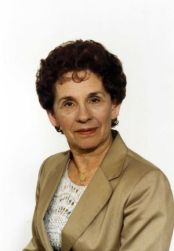 start, I want to say I would much rather you could have the chance to sit with Katie’s five children, as I did yesterday evening, and listen to them share about their mother. They could do a far better job than I to communicate to you who their mother was and why they loved her. Prov 31:28 says, “Her children arise and call her blessed.” Never was there a truer statement.
 Orthopistis