Advent, Christmas Is Coming! Be Ready!, sermon

Surrender and Be Ready! (Advent Week 4)

Tim Allen was in two rather different Christmas stories. (Both characters, interestingly include the names of Protestant Reformers: Martin Luther and John Calvin.) Scott Calvin in The Santa Clause learns from an elf that–through a series of unplanned events–he now must become the new Santa Claus. He is told he has 11 months to get his affairs in order before reporting for duty to the North Pole. The film centers on Scott’s process of coming to terms with the responsibility that has been thrust upon him. Ultimately, he surrenders to the call and embraces it. On the other hand, Luther Krank in Christmas with the Kranks spends the majority of the movie resisting cultural expectations of the Christmas season and enduring the gossip and scorn of his neighbors because of his choices. The experience of these characters relate in different ways to the story of Mary we find in the Gospel of Luke 1:26-38. In that story, she is called to surrender to a life that will ultimately result in rumors, gossip, and misunderstandings alongside unlimited love, wonder, and grace.

Subscribe to receive email notification of new posts.

The first thing the text teaches us is that we must surrender to God’s presence (vv. 26-30). While God is always present, there are times he is present and calls to us in a special way. A dramatic example of this is the sudden appearance of the angel Gabriel to Mary, a virgin pledged in marriage to Joseph. While modern Western women typically get married in their mid- to late-twenties, Mary likely was in her early teens (12-15 years old, if she was the typical first century Jewish girl). Gabriel greeted this teen as “highly favored one!” and told her, “the Lord is with you!” The young girl was greatly troubled by the words, filled with questions about what the greeting could mean. The words–not the appearance of the angel!—created these doubts and concerns. Perhaps the fact the angel wasn’t the source of her concern shows a steely resilience in this girl that would be important for the mother of the Messiah (vv 28-29). Her reaction certainly was different from that of the old priest Zechariah in the preceding story. He was “gripped with fear” upon the sight of this same angel . . . even before the angel had a chance to speak a word to him (1:11-12).

The angel comforted both of them with the words, “Do not be afraid!” because Zechariah’s prayers have been heard and Mary had found favor with God–like others before her, such as Noah (Gen 6:8), Abraham (Gen 18:3-5), and Moses (Exod 33:12-13). In the presence of God, we may feel fear or find comfort, but there is always an element of danger. It is like being in the middle of a violent thunderstorm. If we are in the bare elements, the raw energy and power of the storm can be a fearful if not deadly experience. From the safety of our home, however, that same raw power fills us not with fear but with awe at the beauty of the lightening show and the roar of the thunder. In the same way, those who are in God’s grace (the Greek word translated here as “favor”) are safe within the dangerous presence of the living God. Mary surrenders to God’s presence. Do we?

A second thing we see in the story is that we should surrender to God’s power (vv. 31-35). The virgin is told she will have a child and must name him Jesus. The pattern of the announcement (conceive/give birth/call the son) is the same pattern found in the sign of the prophet Isaiah to King Ahaz (7:14), “the virgin will conceive and give birth to a son, and will call him Immanuel.” The birth of Jesus is the promise that God is with us (the meaning of the word Immanuel). But there is an earlier story that also uses this same announcement pattern, a story about another strong woman placed in a precarious position yet told to surrender to God (Gen 16:11). Hagar is visited by an angel to tell her that she has conceived and will give birth to a son, Ishmael (which means “God hears”). The birth of Jesus means that God has heard the suffering of his people and so he has sent a Savior to liberate us. Ishmael, Abraham’s firstborn, was not the ultimate child through whom God’s promises to Abraham would flow. That would be Isaac. Though Judaism was a blessing, it was not the ultimate blessing. That blessing would come through the birth of Jesus, Abraham’s seed through whom all nations would be blessed.

The promise of the son to be born to Mary was not like the promise of the son to be born to Zechariah. The angel told Zechariah that John the Baptist would be “great in the eyes of the Lord” (1:15) but Mary is told that Jesus will be “great” (v 32). That is, John’s greatness was dependent upon God’s perspective but Jesus’ greatness was inherent to who he was. Another difference between these births is that John from birth was not to have wine or fermented drink but Jesus had no restrictions placed on him. He was holy (v 35) and did not need to maintain his righteousness (1:6) through any specific actions.

Luke tells us that Mary was pledged to Joseph, a son of David. The Romans (and Jews) understood adoption to be a legal avenue to ascend to the throne. Augustus Caesar was the adopted son of Julius Caesar, as Tiberius Caesar was the adopted son of Augustus, yet all three ruled the Roman Empire. Jesus would have a legitimate claim to the throne as an adopted son of Joseph. To make sure the reader understands that Mary’s son was the Son of David to inherit the throne of his father David (v 32), however, Luke shapes the words of vv 26-27 (“God sent the angel Gabriel to Nazareth, a town in Galilee, to a virgin pledged to be married to a man named Joseph, a descendant of David.”) with faint echoes of 1 Samuel 16:1 (“The LORD said to Samuel, ‘. . . I am sending you to Jesse of Bethlehem for I have chosen one of his sons to be king'”–that king being David).

Yet before David’s throne is mentioned (v 32) or the title Son of God was bestowed upon Jesus (v 35), the angel first clarifies Jesus’ title, calling him, “Son of the Most High.” This Jewish circumlocution for Son of God is interesting to find in Luke (given his predominantly Gentile audience), which may indicate the Jewish origins of this announcement story. But more significant for Luke’s use in this passage is that it explains the “type” of Son of God Jesus would be. Augustus and Tiberius were both called “Son of God” when Caesars, because the Romans had declared their predecessor (upon his death) to have become divine. Jesus, however, was not Son of God as a mere human accolade or on account of the deification of a human (whether David or a Caesar). Jesus was Son of the Most High–YHWH. He was the Son of the God of all creation.

At this point, Mary asks a very reasonable question: “How is this possible? I have known no man.” Her question is not one of doubt or rejection. It is simply one of confusion. Her question is not like that of Zechariah in the preceding story. When he hears the angel’s announcement that he and Elizabeth will have a child, he asks, “How can you be certain?” But then this foolish question is followed by a wisdom borne from years of marriage, for he says “I am old” but then says my wife is “well along in years.” (In other words, she’s had her 39th birthday many times over, but he doesn’t call her old!) The response to his doubt was, “Dude! I’m Gabriel. I stand in the presence of God and I just told you. Why are you doubting!?” (1:18-19). This rebuke was followed by a temporary curse so that Zechariah cannot speak until John’s birth. But Mary doesn’t doubt. Instead, she demonstrates faith seeking understanding.

Gabriel explains, “The Holy Spirit will come on you” (v 35). This same phrase is later used by Jesus in a promise to empower his disciples as his witnesses (Acts 1:8). In a poetic restatement of the same idea, the angel says, “The power of the Most High will overshadow you.” The imagery is twofold. First, it invokes the image of the Spirit of God hovering over the chaotic deep at the start of creation (Gen 1:2). Jesus’ birth is the genesis of a new work of God, the start of the New Creation. Second, the language draws our thoughts to the presence of God overshadowing the tabernacle, the meeting place of heaven and earth (Exod 40:35). The child to be conceived will be a new and final temple, the fullness of God in bodily form (Col 2:9). So Jesus will fulfill God’s promise to David that David’s seed would reign forever (v 33) and build God’s temple (2 Sam 7:13).

Because God is all-powerful, you do not need to fear his calling if his presence is with you. God fills Christians with his Holy Spirit. He has given believers the same power that miraculously conceived a child in the womb of a virgin. What is God calling you to do in the coming year? Will you surrender to his power, as Mary did?

Finally, the text reveals our need to surrender to God’s perspective (vv. 36-38). Too often, we look at ourselves and our flaws and do not see the potential which God sees. We do not see the possibilities that the power of God opens up for those who live in the presence of God. From Mary’s perspective, the future is unclear because “I have known no man.” From Zechariah’s perspective, a child is impossible because he knows that he and Elizabeth are too old. Each fails to see that God was with them, that his grace (that is, his favor) was on them. They needed to reframe their stories from the viewpoint of God.

To help Mary see her situation from a new perspective and demonstrate God’s power, Gabriel told her Elizabeth, her relative said to be infertile, was in her sixth month (v 36). The woman everyone in town gossiped about, who must be accursed of God because she couldn’t conceive. Why, if Elizabeth had lived in the American South, the community would have said one to another, “Bless her heart!” But now something had changed. She was the talk of the town in a radically new way. The gossip had turned to wonder and praise. Sorrow now became joy. How was this possible? Because “no word from God will ever fail,” Gabriel said (v 37). This is the same phrase (in the Greek translation) used about Sarah’s conception (Gen 18:14). Isaac was the child of promise born to Abraham and Sarah in their advanced years. Abraham is told God’s covenant would pass through Isaac and not the “natural born” son, Ishmael. So Jesus was the ultimate child of the promise through whom, as the seed of Abraham, “all nations would be blessed” (Gen 18:18).

As we reach verse 38, we find the clearest statement of Mary’s surrender. “I am the Lord’s servant” (literally “slave”). Mary submitted herself to God’s presence and power because she now saw things from a new perspective. She surrendered to God and to his plan. When we hear her say, “May it be done according to your word,” we often imagine a demure young woman meekly acquiescing to the angel. But, as N.T. Wright once noted, it is probable half the women in first century Israel hoped they would be the mother of the Messiah. Everyone was convinced he was coming soon. Perhaps we should hear the response as an eager exclamation much more in keeping with the strong will she seemed to possess. “Bring it on! Let it be me!”

Why this young girl? We are not told that Mary received this calling because she observed the Torah blamelessly, as Zechariah and Elizabeth did (1:6). Their son John was the climax of the old covenant, but not its fulfillment. Their Torah observance was a blessing, but there was coming an even greater blessing, a new covenant of righteousness based on faith in Jesus. In Mary’s story, we catch a glimpse of this life of surrender and faith. Luke presents Mary as a paragon of faith. Like a female Abraham, she received a call from God and stepped out in faith, not knowing where the journey might lead. Unlike Moses, she did not question God’s calling (Exod 3:11, 13; 4: 1, 10, 13) but accepted it like a Daughter of David. David raised no objection nor question when God sent Samuel to anoint David with oil to be king (1 Sam 16:2, 13). Similarly, when God sent Gabriel to announce to Mary the overshadowing of the Spirit and coming of Messiah, she accepted the call.

Certainly Mary (like Abraham) did not understand all that her calling entailed. Without question, she was the object of gossip, slander, and speculation about the source of her conception. She likely had tense relations with her in-laws under whose house (or at least in whose village) she resided after marrying Joseph. (The loss of family honor within the community would have been part of the impetus for Joseph’s contemplation of divorce, Matt 1:19.) Governmental bureaucracy and red tape required her to travel many a mile while 9 months pregnant just to complete a census. Then persecution forced her to become a political refugee and spend years in a foreign land, learning a new language and navigating unusual customs. More than likely Joseph struggled in Egypt to find a job due to prejudice against immigrants and the faced constant insecurity because they didn’t have a family or clan to protect them. And all this before she probably turned 18!

Are you ready to surrender to God’s presence and discover the Jesus we celebrate at Christmas? Are you prepared to surrender to God’s power and live as a witness for Christ through the power of his Spirit? Will you surrender to God’s perspective, trusting that he sees the potential you do not, that his power and presence will be with you to fulfill whatever calling he places on your life? Do you see yourself as God’s servant? Christmas is coming! Surrender and be ready!

Subscribe to receive email notification of new posts.
“Surrender and Be Ready!” (Luke 1:26-38)

Chronicles, sermon

Giving Thanks with Joyful Praise

For many, Thanksgiving in 2020 was very different. Lucy and I, for instance, were home by ourselves. My isolation ended around lunchtime, so we spent the 10 days prior on different sides of the house. (Fortunately, Lucy never caught the virus!) Our sons were in different cities and the closest we came to being together was a family Zoom call in the afternoon.

One news article of interest said in its opening statement, “See that Thanksgiving celebrations are restricted as much as possible so as to prevent another flare-up.” The reason it was interesting, however, is that it demonstrates that 2020 is not as unusual as we think. The story ran in the Omaha World Herald on November 28, 1918! Thanksgiving 1918 was a very unique time in the United States. Lots of people wanted desperately to celebrate, for the end of World War I had occurred just a few days before. But in many communities, that simply wasn’t possible as the Spanish Flu continued to spread across the states. Moscow, Idaho’s paper had the most interesting headline, “Dread of Influenza Queers Plans for Thanksgiving.” 1 Chronicles 29:1-20 calls us to give thanks with joyful praise in whatever time of life we find ourselves.

The first think we see in the text is that we should praise God from whom all blessings flow. David began his prayer (v. 10) in front of the assembly with a statement of praise and he ended it (v. 20) by calling all the Israelites with him to praise the LORD. He emphasized the praise of God should be from everlasting to everlasting and should be from all in heaven and on earth. (So all of creation should praise the LORD throughout all of time.) L.C. Allen says David’s prayer “ransacks the theological dictionary.” He speaks of God’s greatness, power, glory, majesty, splendor, exaltation, wealth, honor, rulership, power to exalt, and power to give strength.

As you may know, the Lord’s Prayer as recited in churches is not exactly the same as that found in the earliest copies of Matthew 6:9-13. Most notably, the statement, “for yours is the kingdom and the power and the glory forever. Amen.” is missing. Most biblical scholars think the origin of that ending to the prayer–which speaks of God’s kingdom coming–was the prayer of David, in 1 Chron 29:10-13. It also speaks of God’s kingdom and ascribes power and glory to God. But whereas the Lord’s prayer ends with this exaltation of God’s kingdom, power, and glory, David’s prayer begins with these ideas. David saw his kingdom as God’s kingdom and knew that it existed not because of David’s own power or glory but because of the LORD’s.

A second thing we learn from this passage is that we should thank God for the blessings of life. Verse 13 says we give God thanks. This is what we say that we do at Thanksgiving, yet at times, do we mean it? We say that we gather to give thanks but how many tables see this more as a time of self-congratulations for the accomplishments of the past year? Do we celebrate our resourcefulness? Exalt our hard work? Announce our good fortune? If we do, we have it the wrong way round. David notes (v. 17) that God tests the hearts of all and is pleased when he finds integrity. God knows our true motivations, whether we are thankful or proud.

The proper view is expressed by David in verses 14 and 16. Everything is from the LORD’s hand. It all belongs to him. In reality, we are but foreigners and strangers in the LORD’s sight (v. 15). David is referencing Leviticus 25:23, which tells us the land belongs to God, so the Israelites could not permanently sell the land, for they were foreigners and strangers residing in the land of God. Foreigners and strangers in their world were those who owned no property, and thus who had no true security. Foreigners and strangers were able to exist in an area only because of the good graces of the landowners in the region. For the Israelites, God was their landowner. They existed in the land only as his servants and whatever they received was from the grace of God.

Finally, the text teaches us that we should give joyfully and willingly. Verse 2 tells us that David had given toward the building of the temple throughout his kingship. Yet in verse 3, David gives again out of his personal treasures. Then, in verse 5, David issues a challenge to all of Israel. “Who is willing to consecrate themselves to God today?” The word translated “to be willing” was used in the Torah for the freewill offerings. The word translated “to consecrate” was used in the Torah for the special preparations for the priests to serve the LORD. The emphasis of David was on the Mosaic promise that the nation was a holy nation, a kingdom of priests (Exod 19:6). And we are told that the people gave! They gave so much that David asked (v. 14), Who am I and who are my people that we can give so generously? He then noted that they only gave what God had first given to them.

Not only did they give willingly to the point of generosity, but they gave joyfully. Verse 9 tells us that the people rejoiced when they saw the giving of their leaders. David said in verse 17 that he had witnessed the generous giving of the people with joy. Then, in verse 18, David prays that these desires and thoughts would be kept in the hearts of the people forever. He prayed that they would be willing and joyful givers at all times. Paul told the Corinthians centuries later that God loves a joyful giver, but some have misunderstood this text (2 Cor 9:6-11). When it says if you sow sparingly you will reap sparingly but if you sow generously you will reap generously, it is not a promise that God will honor your gifts and give you back more than you give. (Remember, David says God knows our hearts and so knows what the motive is in our giving!) Instead, Paul’s emphasis is on being a joyful giver. It is God’s after all and not ours, so why do we begrudge giving it as needed to others? We are simply invited by God to participate in blessing others. Jesus said, “It is more blessed to give than to receive” (Acts 20:35). The issue is whether we will receive joy in our hearts because we gave generously or begrudge the small gift we give and receive little in return from what should have been a blessing.

So let us give thanks this year with joyful praise. Give generously to God, in the midst of the pandemic, in the midst of uncertainty, even in a time where you cannot always physically gather together. Praise and thank God for every provision he provides, whether you are with family this holiday season or apart. Always remember that we are all foreigners and strangers in this land, but our God is a gracious and good landlord, who will provide for our every need.

Subscribe to receive email notification of new posts.

“Giving Thanks with Joyful Praise” 1 Chronicles 29:1-20

Chronicles, sermon

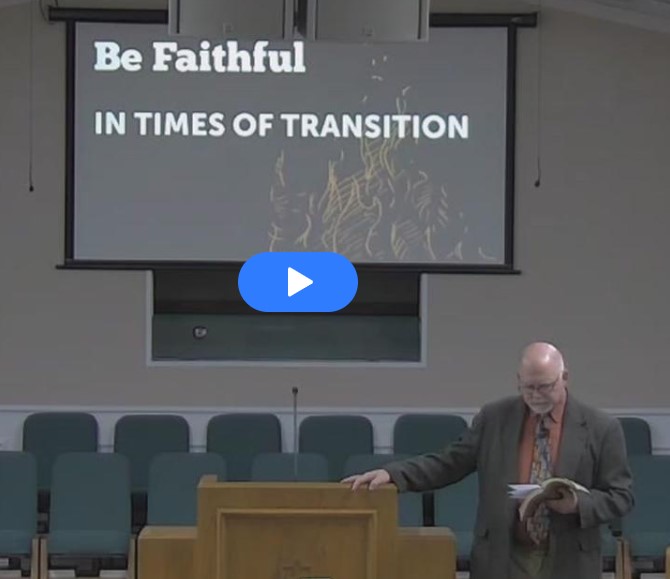
In Times of Transition

As David neared the end of his life, he knew he would not be the person to build the temple. He could have been like King Hezekiah, who, when told that a later generation would be conquered by the Babylonians, simply replied, “Well, at least there will be peace during my reign!” (2 Kings 20:19). So David could have thought, “Well, I will leave all those issues to Solomon.” Instead, we read in 1 Chronicles 22:5, “David said, ‘My son Solomon is young and inexperienced, and the house to be built for the Lord should be of great magnificence and fame and splendor in the sight of all the nations. Therefore I will make preparations for it.’ So David made extensive preparations before his death.”

David was like any father of an 8 year old boy who needed to build a pinewood derby race car. When the son shows up at the races, he has a sleek, well-lubricated, and properly weighted car because dad “showed” the son how to do it. Or the 12 year old girl whose entry into the science fair looks like a graduate research project (but she struggles to explain the project or the data without dad’s help). The Chronicler in chapter 22 tells us of David’s private instructions about Solomon. The focus of our devotional today, however, will be on David’s public presentation of Solomon to the Israelites as the next king (ch. 28). The two chapters contain much of the same information, though there are slight differences. David in chapter 28 is preparing the people for their new king. He is also preparing Solomon to build the temple for YHWH. A church in transition between pastorates can learn several lessons about how to prepare themselves for the coming of the new pastor.

First, we see that in times of transition, we should be faithful. David chose to be faithful even though he had been told “no.” In verses 2-3, he says the reason God told him he couldn’t build the temple was that he was a man of war and bloodshed. David goes on to recount his history as king (vv. 2-7) and gives a charge to the gathered Israelites (v. 8) and to Solomon(vv. 9-10). The Chronicler presents David as Moses in the book of Deuteronomy, giving speeches on God’s faithfulness during the Exodus and wilderness wanderings. Moses, though he was told he would not enter into the “good land” (v. 8 cf. Deut. 1:25, 35; 3:25; 4:21-22; 6:18; 8:7, 10; 9:6; 11:17), prepared the Israelites through his speeches and leadership in the book of Deuteronomy. So David had prepared for the building of the temple and was not explaining the future through a speech. Solomon is also presented as Joshua in this passage, for David and Moses both commission them before all Israel (v. 20 cf. Deut 31:7). Yet when David emphasizes the need to be faithful and obey the commands in order to remain in the good land, the Chronicler’s true audience to hear this injunction are his fellow returning exiles, who understood what it was to live in exile.

David was essentially saying, I am passing away. Do not place your hope in me. Hope instead in God. For it was God who chose the house of David (v. 4); God who chose Solomon to build the temple (vv. 5-7); God who gave the commandments that would lead to life and peace (v. 8); God who would remain when David was gone (v. 20). And it is God who is still at work today! Not that in verse 7, God says, “I will . . . if . . .” God is always faithful. Are we? But it is not just the leader who is to be faithful. All must be faithful. Verse 8, if it were written in Texan, would say, “I charge y’all . . .” (not “you” singular) “in the sight of all Israel.” The people were to keep the commands so they could possess the good land and give it as an inheritance to their descendants. This again is imagery from Deuteronomy.

While verse 8 was to all Israel, verses 9-10 are directed to Solomon, but they still apply to all. Solomon is to serve God with a whole heart and a willing mind, for God knows the intent and motives of each person. This should give us hope, for he knows if we meant well even if we fail in our acts. It should also be a warning, however, that God knows if our motives are selfish, even if we succeed and/or seem to take action for others. Therefore, we are to seek him, for he will be found by us. But, David warns, if we forsake God, he will reject us. This seeking and forsaking is not a reference to a single act or moment in time. David is speaking about lifelong trajectories, but each act can be a step in one direction or the other.

A second thing David notes is that we should be prepared. David was prepared. He gave Solomon detailed plans. Plans for the temple. Plans for the courts. Plans for the priests and the Levites. And David had already set aside funds for the project. In verse 19, David says he has written all of this because the Lord’s hand had been upon him. David is presented as Moses on Mt. Sinai in the Exodus story (Exod 25-30; esp. Exod 25:9). God gave Moses the plans for the tabernacle. So now God has given David the plans for the temple. Many members of the congregation have invested in the church for years. All of their work has been a preparation for the years to come. The Transition Team has led the congregation to prepare itself for the immediate future. The Pastor Search Committee is now at work preparing for the next pastorate. Some of us might not see the completion of the current work, but we must be faithful in the preparation, as David (who made all the plans but didn’t see the completion of the project).

The third thing David says is to be confident. In verses 5-6 and in verse 10, David tells Solomon that he is God’s choice for the one to build the temple. In verse 10, David tells Solomon to “be strong and do the work.” Later, in verse 20, David says to “be strong and courageous and do the work.” Solomon, like Joshua, is to be the next leader of the people. Both led the people into a new era (Joshua into the land; Solomon into a time of peace and temple-building). So David tells Solomon, like Moses told Joshua, to be strong and courageous (Deut 31:7). Again like Moses to Joshua, David told Solomon to not be afraid or to be discouraged (verse 20; cf. Deut 31:8). But Solomon is not simply like Joshua in this text. He is also like Bezalel, the builder of the tabernacle in Exodus. Moses gave the plans to Bezalel to build the tabernacle (Exod 38:22). So David has given Solomon the plans for the temple. Both Bezalel and Solomon are told to “do the work” (verses 10 and 20; cf. Exod 36:1-2).

Why does David tell Solomon to be strong and courageous, and especially who should he not be afraid or discourages? Because the LORD God would be with him. Not just any god, but YHWH, the God of the covenant promises would be with Solomon (v. 20). Not only is he the God of the covenant promises to Abraham, Isaac, and Jacob. Not only is he the God who made a covenant with Israel through Moses at Sinai. He is “my God” (i.e., David’s God). David says, the God who made a covenant with me that you, Solomon, will build the temple and reign after my death–it is that covenant God who will be with you. If he promised you would build the temple, what have you to fear? And so it is the same covenant God who is with us. And we have the sure promise from him of a new covenant through his Son, Jesus Christ.

Note that the Joshua language of verse 20 (be strong and courageous; do not fear or be discouraged) is modified with the promise “he will not fail you or forsake you until all the work for the service of the temple of the LORD is finished.” To us, that sounds like God will only be with Solomon for a while. But if we look more closely, we find that this is Bezalel language. Just as Bezalel led the workers to complete the tabernacle (Exod 36:1; 39:32), so Solomon’s priests, Levites, and skilled professionals (v. 21) will help him to accomplish the work of building the temple.

In many ways, David and Solomon (Moses and Bezalel, and Moses and Joshua) are like runners in a relay race. A relay team will only be successful if the runners are faithful to do their part in the leg of the race that they run; if the runners are prepared to give and to receive the exchange; and if they are confident that each member will do his or her part in running the race. The intent of the Chronicler is the same for us today as for his audience in his day. In the days ahead, we are called to be faithful, to be prepared, and to be confident, for God is not finished with us yet.

Subscribe to receive email notification of new posts.

“In Times of Transition” 1 Chronicles 28

Chronicles, sermon

Finding Wisdom in a Foolish Thing

When I was in middle school, I could do some very foolish things. Once, the history teacher left her room and all the students started egging me on to put her podium on top of her desk. (Not sure why everyone thought that would be funny. Probably just because she was very short and it would be incredibly difficult for her to get it down.) Needless to say, when she came back into the room, my friends who encouraged me to do this very quickly turned on me and let it be known I was the culprit. It was not my first visit to the principal’s office . . .

In 1 Chronicles 21:1-22:1, we can find wisdom in an equally foolish act of David. The main focus of verses 1-8 is that we should confess foolish things. In the story, “Satan” or an adversary of Israel incited David into a census. (Unlike the two clear examples of the Satan in the Old Testament, this one does not use the definite article, ha. While many translations translate it “Satan,” it is used in other parts of the Old Testament simply as an adversary, a human adversary. It could be either in this instance.) Joab gave David a wise warning. Why bring guilt on Israel by this act? Joab found it repulsive (v. 6) and God saw it as evil (v. 7). When forced to comply, Joab intentionally does not comply fully with the ordered census, not counting the Levites nor Benjamites. Yet, while Joab spoke of it as bringing guilt upon Israel, David comes to see it as his own personal guilt. In verse 8, David three times speaks in the first person (I sinned; my guilt; I did a foolish thing).

Are we willing to do what is right even if it means disobeying earthly leaders? Joab didn’t count Levi most likely because it was prohibited in the law. It is not clear why he didn’t count the tribe of Benjamin, though it might have been because the tabernacle was in Gibeon, a city in the Benjamite lands. Are you like Joab, willing to give wise counsel even when it might be unpopular to hear? Do you listen to wise counsel or ignore it the way David did? When you do a foolish thing, do you confess your error and take responsibility for your actions, like David finally does?

In verses 9-13, we see that we should trust in God’s mercy. The prophet Gad tells David that God will give him three options for punishment of his sin. None of the options are easy, as we are told that David is literally “tied up in knots” (v. 13, translated “deep distress” in the NIV). Once again, we see that David takes personal responsibility for the punishment. He says, let “me” fall into the hands of the LORD and not the hands of men. He asks God to punish him, because he knows that God’s “mercy is very great.” He knows God’s mercy is great, as the psalmist says (Ps 86:15-16).

David doesn’t want humans involved because they cannot be trusted. They might cause harm to Solomon and thus destroy the dynasty promised to David by God. War (fleeing before his enemies) could destroy his family, including Solomon. Famine could place the nation in the position of debtor to another nation who sold them food. This could leave Solomon in a weak position with having to re-develop the kingdom and owing debts to others. Plague was placing himself in God’s hands and hoping in the mercy of God to see them through. Do you pray for God’s mercy, for yourself as well as those who come after you? Do you have faith God will protect and defend you no matter the situation?

In verses 14-17, we see David intercede for others. God’s mercy did indeed prevail. Though 70,000 died, Jerusalem was spared. As the angel’s sword rises over Jerusalem, God cried out, “Enough!” His mercy seems to have cut short the plague of the angel (v. 15). We read immediately after (v. 16) that David and the elders were in sackcloth and face down in prayer. Perhaps they were already in this repentant posture of prayer and this led to God’s relenting. Perhaps their prayers were an act of contrition and thanksgiving following God’s mercy. I tend to think it is the former, but the text is not clear.

Yet again David confesses his sin and his alone (v. 17). “I ordered,” he says. “I sinned.” “I did wrong.” He asks God to punish him, the shepherd, and not his sheep. He even offers that God’s hand can fall on David and David’s family. That is, after all this, he offers God the option to rescind the covenant God made that his son Solomon would reign after him. He was willing to throw it all away if it would save his people. Do you intercede for others who suffer? Do you offer to suffer that others might live? Do you willingly share one another’s burdens?

In verses 18-24, we see that David sacrifices willingly. Gad told David to build an altar on the threshing floor where the angel had stopped his advance. David willingly obeyed this word (as opposed to his ignoring the counsel of Joab earlier in the story). David had to approach the angel and no doubt was well aware that he might be slain at any moment. The threshing floor belonged to Araunah. He and his sons saw the angel with the raised sword. Interestingly, we are told Araunah’s sons hide but Araunah himself continued to thresh (v. 20). Araunah was a Jebusite. His name may have meant “Lord,” and it is likely that he might have been the deposed king of Jerusalem. (The city had been a Jebusite stronghold before David conquered it and made it his capital.) Even if Araunah was not the deposed king, he may have no doubt viewed the angel as God finally bringing vengeance upon David and the Hebrews for the theft of their city and their lands. He certainly doesn’t seem put off by the angel’s advance.

In the story, it is only as David approaches that Araunah ceases his work and bows down to the approaching king (v. 21). When David asks to purchase the threshing floor, Araunah responds, “take it! for the king can do whatever pleases him.” He then offers the oxen for the offerings, the sledges for the sacrificial wood, and the wheat for grain offerings. Either Araunah is very generous to God or he is sarcastically saying, you’ve stolen everything else from us Jebusites, why not take the rest (v. 23)?! David sees the sacrificial offer of Araunah (whether made in good faith or with biting sarcasm) and realizes that true sacrifice is costly. So David insists on paying “full price” for the land. He says, “I will not take for the LORD what is yours, or sacrifice a burn offering that costs me nothing” (v. 24). David then gives Araunah 600 shekels of gold, which would have been far more than the full price of the land. It is quite possible that David in this moment realizes the injury he has caused Araunah and the other Jebusites and is making restitution for the city of Jerusalem that he had earlier taken. Do you take the easy way when it is offered to you (like David could have done)? Are you like Araunah, offering your gifts and material possessions in service to others (even begrudgingly at times)? Do you sacrifice your own time and possessions to serve God and to serve others?

Finally, in 21:25-22:1, we learn that we should look for good in the midst of darkness. David bought the threshing floor. David built an altar. David burned sacrifices to God. He called on God and God answered him and accepted his offering. The angel then finally sheathed his sword. The crisis had now been averted. David then offered more sacrifices in response to the good fortune and mercy of God. We are told that David was concerned about the sword of the angel (that it might become unsheathed again) and that, because of this concern, David continued to make offerings at the threshing floor altar. David did this even though the tabernacle still stood in Gibeon, including the bronze altar on which David had been offering sacrifices even after moving the ark to Jerusalem.

David became convinced from the outworking of his foolish act that God had determined the location for the future temple. It was to be upon this threshing floor. Whether it was Satan or a human adversary who first incited David to count his fighting men, God had been able to turn it into something good. As Joseph had said in the book of Genesis, “You intended it to harm me, but God intended it for good to accomplish what is now being done, the saving of many lives” (50:20). Satan intended evil that day, possibly the disruption or destruction of the Davidic covenant, but God brought about the “discovery” of the location for the future temple. Similarly, Satan intended evil to Jesus when he brought about the death of the Messiah on the cross, but God through the resurrection brought about salvation and made the cross into a symbol of hope. Have you called on God in faith? Do you go beyond expectations to worship God and to serve him? Do you see God at work even in the most difficult of times, turning evil to good? We can find wisdom even in the most foolish things we do, if we confess and give these things to God.

Subscribe to receive email notification of new posts.

“Finding Wisdom in a Foolish Thing” 1 Chronicles 21:1-22:1

Chronicles, sermon

God of the Unexpected

When I originally planned to preach this sermon, I found myself headed to the ER rather than to the church on that Sunday morning. It certainly was an unexpected trip. Fortunately, everything checked out and I was released the following day. A friend who pastors another church suggested I revise the sermon . . . or burn it! But God throughout the Bible is a God of the unexpected. Abraham never expected to have a child by Sarah when they were 100 and 99! The people standing on the banks of the sea expected to die at the hands of Pharaoh’s army. They never expected a wind would blow those waters apart. Even the story of Saul didn’t initially appear to be about a failed kingship. Instead, David became the king . . . which leads to the story of the unexpected that we will look at today, in 1 Chronicles 17.

In the text, we first find a God of the unexepected “nope.” First, we see in the text that we don’t speak for God. Nathan does just this in the text. In verse 2, Nathan doesn’t even hear the full plan of David. He hears enough to know it is about God and the ark and assumes that whatever David has “in mind, do it, for God is with you.” Why wouldn’t God be? It was for God. It was an act of devotion. It must be something good. We must beware, however. Even the most spiritual of us should never rely on the “obvious.” We must always inquire of the Lord.

Second, we learn we shouldn’t assume our plans are best. David assumed his plans were right. He wanted to build a temple. This was the most natural step in the ancient world. When an earthly king came to power, not only would he build himself a house but he would also build a house for the heavenly king who brought him to power. God had allowed David to bring the ark of the covenant to Jerusalem, after all. If he was pleased to have his ark dwell in the tent David had prepared, why not a splendid temple? But God told him that he was not the one to build a house for God (v. 4). The time is not yet. The person is not you. David assumed God wanted a house. David assumed God was not happy moving from place to place. But just as David’s first attempt to move the ark was not successful because it wasn’t done in the proper way, so now David’s plan to build a temple was not the right time nor was he the right person. God tells David that it is his son who will build a house of the name of YHWH.

Third, we must not lose sight of who serve whom. David was concerned that he had a palace but God only had a tent. But God indicates he was ok being a nomad. He had never complained about wandering with his people (vv. 5-6). God points out to David that the only reason David has a house of cedar is that God had taken the nomad (David, the shepherd) and made him the king. God had given him rest because God had enabled him to defeat his enemies (vv. 7-8). David’s desire with the temple was to make YHWH’s name great, but God says instead that he will make David’s name great. In the command of God to Nathan, God calls David a “servant” (v. 4). At the time, David was rather proud of his accomplishments and wanted to add temple-builder to his resume. But after God’s rebuke and covenant through Nathan, we see in David’s prayer that 10 times he calls himself “servant” (vv. 16-27), showing that he now understands he serves YHWH and not the other way round. It is God who gifts us with all that we have and all that we are. We receive his unmerited favor. As David says, “Who am I that you have brought me this far?” (v. 16). God tells David that he will set David’s seed over “my” house and “my” kingdom (v. 14). David is not to forget whose kingdom it is nor whose temple it will be. So we shouldn’t speak for God without seeking him in prayer. We shouldn’t assume to know the right time or person for even the most spiritual of activities. And we should never forget it is God who is God. Otherwise, we will encounter the unexpected “nope” of God.

But not only is God the God of the unexpected nope. He is also the God of the unexpected hope. God gave hope to the leader of his people. David wanted to build a house for God, but God says he will build a house for David (v. 10). He will give him a dynasty. His descendants will reign after him in Jerusalem. David also wanted to make God’s name great, but God says instead that he will make David’s name like the names of the greatest men on earth (v. 8). Though God removed his love from Saul, God will give David a dynasty (v. 13). His throne will be established forever and he will build the house for God (v. 12).

God also gave hope to the people. God made a people for himself. The Exodus is hinted at in Nathan’s oracle (v. 5) and is mentioned in David’s prayer (vv. 21-22). In verse 9, God promises to provide the people a “place” and to “plant” them, so that they won’t be disturbed nor oppressed by enemies (v. 9). Building a “place” is language for the temple. “Planting” is language of the Land. God is making his people holy in their land if they will only trust in him and obey him. So God’s promise is that they will no longer be nomads. Like David, they will have a settled life. It is only then, when the people are settled that God will accept the idea of having a permanent structure built for his ark. David asks in his prayer, “Who is like this people?” What makes them special? It is God who has redeemed them and brought them out, for what other nation can claim that their God created them rather than the people creating their gods (vv. 21-22)? If you want God’s name to be great, then be the people of God. Let him work through you.

God also gave hope for the future, and this hope brought joy to David. Who am I that you brought me this far, he asks? Then he adds, and if that were not enough, you have promised me a future (vv. 16-17)! In other words, he says, who am I that you have made my present great, yet you promise now a future that is even better?! God made David’s name like the most exalted on earth precisely because David humbled himself and was a servant of his LORD God. This promise of a future gave David the courage to pray (v. 25). The amazing thing about this story is that, when David is told his plans are to come to nothing, he doesn’t despair. He doesn’t complain to God. Instead, he find hope and this hope gives him courage to move forward into an unplanned future. And so David says, if the LORD blesses, he blesses forever (v. 27)!

Finally, God gave hope for eternity. The text gives us hope far beyond the lives of David and Solomon. The Chronicler is writing after the exile and return to Jerusalem. He has seen the temple destroyed. He has seen it rebuilt. He knows that the kingdom promised to David’s descendants did not last forever. Yet he saw that God was with his people in the exile and that he was still with them afterwards. Just as God had been with the people in the Exodus and after they entered into the land, so God was with them now. This gave the Chronicler hope that a Son of Dave would establish God’s kingdom just as the temple had been rebuilt. So, centuries in the future, the gospel writers upheld this same believe. There was a Son of David who would establish the Kingdom of God and reign over it forever and ever. The three Synoptic Gospels all focus on this idea of the Kingdom. The Fourth Gospel focuses instead on the one who would build the temple in three days. All understood that the life, death, resurrection, and ascension of Jesus to the right hand of God was the ultimate fulfillment of unexpected hope.

Subscribe to receive email notification of new posts.

“God of the Unexpected” 1 Chronicles 17 (audio)

Chronicles, sermon

Inviting God’s Presence

The Chronicler tells us how David brought the ark of the covenant to the city of Jerusalem in 1 Chronicles 15-16. In our imagination, we can consider how the text relates to the church in its intentional interim period.

The first thing we see is that David prepared the place. We are told in 15:1 that, after David had constructed buildings for himself and his government in the City of David he prepared a tent to house the ark of the covenant. The church during its intentional interim formed a transition team that helped the church conduct a self-study and work through unresolved issues from the past. In addition, the church reviewed and updated its constitution and developed a mission statement. All of this was preparatory work to lay the groundwork for the coming of a new pastor.

The second emphasis of the text is that David consecrated the priests. In verse 12, David sends some Levites to retrieve the ark. Others were appointed to play instruments (v. 16). Yet others had duties in Jerusalem and trusted the others to do their assigned duties properly. So the church has now selected a Pastor Search Committee and has prayed over them to do their task well. In verse 13, David reminded the people of the faulty first attempt to bring the ark not to reemphasize the past but only to learn from those mistakes and to engage the task properly this time. So our congregation is called to trust in God’s leadership of the Pastor Search Committee and not dwell on the mistakes or issues of the past.

Third, in verse 3, David assembled the people. David called them to participate in the bringing in of the ark, even though the Levites had the specific role of carrying the ark. All were present when the ark was brought into Jerusalem (vv. 28-29). So the congregation participates in the installation of the Pastor Search Committee members and commits to praying for them throughout the process of the pastoral search. We cannot be like Michal (v. 29), despising the work of the committee or desiring that we ourselves played a more significant role.

Finally, we find that even though David did a new thing in bringing the ark to Jerusalem, he also honored the past. David’s goal was the eventual unification of worship in the city of Jerusalem. His plan was to build a temple for God. For now, however, David continued offering sacrifices to YHWH at Gibeon, where the bronze altar of Bezalel still stood before the tabernacle Moses first used in the wilderness (16:39-43). As the church prepares itself for a new pastor and the changes that will necessarily entail, it can hold fast in the belief that it will be change within a continuity of who this church has been and what God continues to call this church to be within its community.

So to invite the presence of God in the midst of this pastoral search, we should prepare the organizational structure and consecrate ourselves and our search committee. We should all assemble in prayer for the ones who will do the work and we should honor the past as we look forward toward the future.

Subscribe to receive email notification of new posts.

1 Chron 15-16, “Inviting God’s Presence”