The Chronicler tells us how David brought the ark of the covenant to the city of Jerusalem in 1 Chronicles 15-16. In our imagination, we can consider how the text relates to the church in its intentional interim period.
The first thing we see is that David prepared the place. We are told in 15:1 that, after David had constructed buildings for himself and his government in the City of David he prepared a tent to house the ark of the covenant. The church during its intentional interim formed a transition team that helped the church conduct a self-study and work through unresolved issues from the past. In addition, the church reviewed and updated its constitution and developed a mission statement. All of this was preparatory work to lay the groundwork for the coming of a new pastor.
The second emphasis of the text is that David consecrated the priests. In verse 12, David sends some Levites to retrieve the ark. Others were appointed to play instruments (v. 16). Yet others had duties in Jerusalem and trusted the others to do their assigned duties properly. So the church has now selected a Pastor Search Committee and has prayed over them to do their task well. In verse 13, David reminded the people of the faulty first attempt to bring the ark not to reemphasize the past but only to learn from those mistakes and to engage the task properly this time. So our congregation is called to trust in God’s leadership of the Pastor Search Committee and not dwell on the mistakes or issues of the past.
Third, in verse 3, David assembled the people. David called them to participate in the bringing in of the ark, even though the Levites had the specific role of carrying the ark. All were present when the ark was brought into Jerusalem (vv. 28-29). So the congregation participates in the installation of the Pastor Search Committee members and commits to praying for them throughout the process of the pastoral search. We cannot be like Michal (v. 29), despising the work of the committee or desiring that we ourselves played a more significant role.
Finally, we find that even though David did a new thing in bringing the ark to Jerusalem, he also honored the past. David’s goal was the eventual unification of worship in the city of Jerusalem. His plan was to build a temple for God. For now, however, David continued offering sacrifices to YHWH at Gibeon, where the bronze altar of Bezalel still stood before the tabernacle Moses first used in the wilderness (16:39-43). As the church prepares itself for a new pastor and the changes that will necessarily entail, it can hold fast in the belief that it will be change within a continuity of who this church has been and what God continues to call this church to be within its community.
So to invite the presence of God in the midst of this pastoral search, we should prepare the organizational structure and consecrate ourselves and our search committee. We should all assemble in prayer for the ones who will do the work and we should honor the past as we look forward toward the future.
Subscribe to receive email notification of new posts.
When the Chronicler retells the story of the monarchy, we are told that David appointed Levites to minister before the Ark of the Covenant (1 Chr 16). He also appointed Asaph and others to sing praises to God. Part of that song says, “Give thanks to the LORD, for he is Good; his love endures forever” (v. 34). In Psalm 136, we find this same statement in verse 1, while the latter part (his love endures forever) is an unending refrain throughout the psalm expressing thanks to God for his loyal love. Let’s consider the psalm within the context of the psalm’s refrain.
The refrain begins with His (God’s). Verses 1-3 open with the praise of God and verse 26 concludes the psalm with praise to God. Verse 1 tells us we are to give praise to YHWH (God’s name by which he has promised himself to his covenant people) for he is good. Three superlatives in the remaining praise of God explain the goodness of the covenant God. He is God of Gods (and so over all other spiritual beings. He is Lord of Lords, that is, he is over any other who might raise themselves up as a ruler. And he is the God of heaven (the one who is above all of creation.
Second, we learn of his loyal love. The Hebrew word repeated throughout the psalm is hesed, a word that is difficult to translate into English. It is variously translated love, lovingkindness, mercy, steadfastness, steadfast love, and loyal love. Verse 4 tells us the loving God does great wonders, but the psalmist is not thanking God for these “wonders” or things he does. Rather, he is thanking God that we know him through the wonders of the universe. When we see his ordering of the cosmos, his rescuing of those in need, his faithfulness to his promises . . . it is then that we understand who he is, for we see his steadfast loyal love in action.
Third, his love, we are told, endures. Beginning with verse 5 until the conclusion in verse 26, the psalmist repeats the great foundational stories of Israel. These are the “wonders” through which we know God. First, all the world knows God through his creation, as the Genesis 1 account is the focus of the psalm. Second, the people Israel know God through his providential hand in their history, he summarizes the Exodus, the wilderness, the conquest, and the gift of the land as inheritance. Hesed is God’s power acting for good in creation, but especially in Israel’s story. God’s goodness is seen as he brings order out of the chaos that seeks to destroy creation and his people. It is also his redemption from the forces that bind the people in suffering and hopelessness. The story of the hesed of God is of love that is everlasting, love that endures and overcomes for the sake of the promise.
Finally, we are told that this love of God endures forever. Verse 23 shifts from “them” to “us” in the narrative. From the ancient past to now, that history is becoming our own history. God’s steadfast love in the past is our promise for today and for the future. We also benefit from his loyal love, his hesed. We are told that God remembered us in our low estate (or depressed condition). Verse 23 along with verse 24‘s emphasis of freedom from enemies is no doubt a reflection of the postexilic community. God freed his people from Babylon and did not forget them in that low estate. As so we can speak our thanks to God for what he does for us today. Hope in the hesed or loyal love of God is what gets us through dark times. It was this faith in the hesed of God that led Jeremiah to prophesy hope in the midst of the imminent destruction of Jerusalem (Jer 33:10-12). In part, he said, the voices of the bride and bridegroom will be heard alongside those bringing thank offerings to the temple, saying, “Give thanks to the LORD Almights, for the LORD is good; his love endures forever.”
In verse 25, after establishing the loyal love of God in all the wonders and mighty acts of God, the psalmist again shifts his gaze. He tells us that God gives bread to all flesh. We are to thank God for the big things but we are also to thank him for the smallest of things. Every meal. Every breath. All things are evidence of God’s loyal love. Notice that verse 25 mentions bread and heaven is mentioned in verse 26. Jesus would have prayed the psalms repeatedly as a devout Jews. It would certainly see that Jesus had this psalm in mind when he taught his disciples to pray, “Our Father in heaven . . . give us this day our daily bread” (Matt 6:9, 11). In all things, in all ways, we should give thanks to God, for his love endures forever.
Subscribe to receive email notification of new posts.
The Netflix original movie Red Sea Diving Resort is a dramatization of events in East Africa from 1979-84. The story centers on the migration of Ethiopian Jews out of their suffering in war-ravaged Ethiopia in search of the land of their ancestral hope, Israel. The story centers on Chris Evans’ Mossad officer, who gathers a group of Israelis to help smuggle these Ethiopian Jews into Israel. The purpose of this review isn’t to discuss the movie itself so much as the events it describes and ideas regarding religion that the it generates.
Subscribe to receive email notification of new Orthopistis posts.
Are you not familiar with Ethiopian Jews? You are not alone. They often used the self-identification “Beta Israel” (House of Israel), though the other Ethiopians often called them “Falasha” (a pejorative term meaning “outsider”). There are a number of different theories about Beta Israel’s origins. Some think the group broke away from the Ethiopian Orthodox Church at some point in the past due to theological differences, namely a more rigorous holding to the covenant rules of the Christian Old Testament/Hebrew Bible. Others, however, have argued that they are from Jewish ancestry. Some think they emerged in the middle of the first millennia from merchants or migrants, either coming from the Arabian peninsula or from the Mediterranean via Egypt and Sudan.
The only tradition presented in the movie, that they are the descendants of the Queen of Sheba who was impregnated by Solomon when she visited him (1 Ki ), is the least plausible of any of the theories. There is a tradition among Beta Israel itself that they are members of the tribe of Dan. Whatever their origin, it is clear that they have a number of differences from Talmudic Judaism. While the argument they are not truly Jewish is one way to explain these differences, a long period of isolation and persecution (including periods of forced “conversion” to Christianity under certain monarchs) could also explain many of the differences. Some examples of the unique elements of Ethiopian Judaism are the existence of a monastic order devoted to preserving Jewish practices against Christian influence as well as the use of the term “Orit” for the Torah (possibly a corruption of the Aramaic term for Torah, Oraita). Overall , however,their practices seem distinctly Jewish.
Unfortunately, the racial discrimination in America that underlies the Black Lives Matter movement is not limited to the United States. It also exists in Israeli society. Although the first Ethiopian Jews arrived in Israel in 1977, they were not officially accepted as Jews by Israel’s Chief Rabbinate until January 2020. In the decades between, they have lived in Israel not only as a minority group, but often they have faced the same discrimination and persecution they encountered previously in Ethiopia. They have been the racially targeted by police, including a higher incarceration rate. Donations of their blood in the early 1980s was destroyed for fear it contained HIV (due to their African origins). They also have struggled with high unemployment rates. Even now, the Israeli right of return is denied to the Falash Mura, descendants of Ethiopian Jews who “converted” to Christianity under duress–even though these modern descendants identify as Jew and not Christian.
In the movie, there are several Exodus parallels to the story of the Ethiopian Jews. Federe Yazazao Aklum is the Moses-like leader of this exodus. He smuggles members of Beta Israel out of Ethiopia into U.N.-supported Sudanese refugee camps, then coordinates with Chris Evans’ character to get them the rest of the way to Israel. While the movie focuses on Evans’ character, Aklum seems to have been the one who pushed for this operation, writing a letter to Israeli Prime Minister Menachem Begin with a request for assistance. The operation depicted in the movie was known as Operation Brothers. It was later followed by the better known Operation Moses in the mid-1980s and Operation Solomon in 1991. Not only is Aklum the “Moses” to his people, but the story’s escape route literally takes them through the Red Sea in order to reach the promised land of Israel, the land that they had been longing for in the stories they told one another for generations. One delicious irony in the story is the unexpected arrival of a group of German tourists, who think the resort is a real vacation spot. Thus, descendants of Nazi Germany unknowingly bolster the operation’s cover and help Israeli agents to smuggle persecuted Jews out of danger to life and freedom!
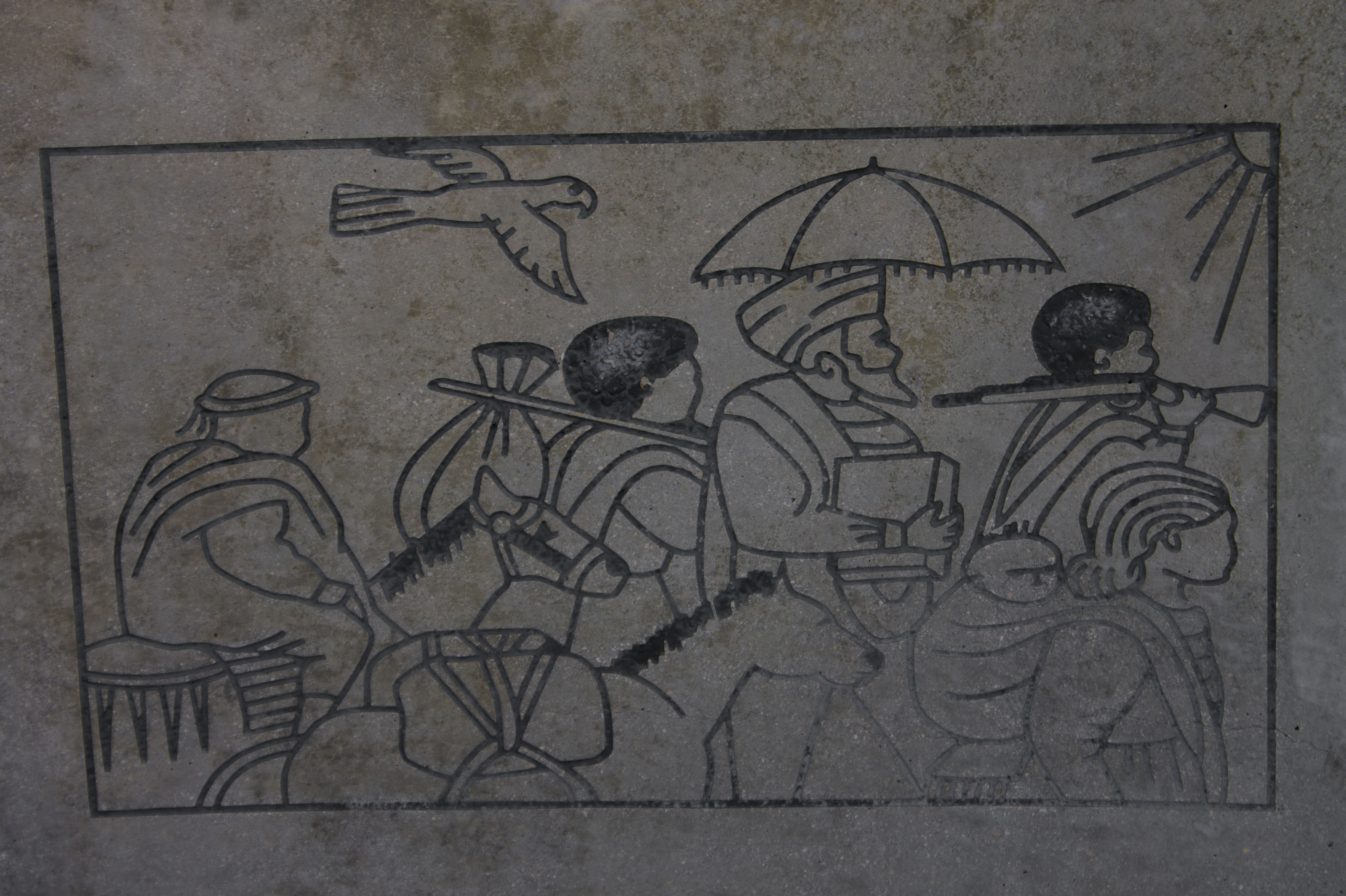
If you visit Israel, you should go to the Memorial for the Jewish Immigrants from Ethiopia on Mount Herzl in Jerusalem. It is part of the national cemetery, a short walk from Yad Vashem (the Holocaust Museum). Sadly, the day I visited, I was the only person there during my 30-45 minutes visit. The memorial is an outdoor tribute to those Ethiopian Jews who died in their struggle for freedom and dignity immigrating to Israel. (The photos in this post were taken during my visit in 2019.)
Image of the migration at the memorial. (The header photo is of the memorial as well.)
According to the Talmud, Psalm 30 was used in the dedication of the temple by Judas Maccabeus and his brothers in the year 165 B.C. Later, Jews began to read this text during Hanukkah, the annual celebration that grew out of this dedication. In the psalm, an individual prayer to God for salvation expands to become a corporate expression of praise of this salvation. And so, Christ committed his spirit to his Father on the cross. Three days later, Christ was raised to life. The Lord’s Supper helps us reflect on how this personal story of salvation, through the power of the Holy Spirit, becomes a corporate reality for all of us who place their faith in Christ. We are his body, his temple, so each time we partake of the Lord’s Supper, we dedicate the temple anew for our service in the name of Christ to the glory of God.
In the psalm there is a movement from death to life. Verse 1 speaks of being rescued from enemies. Verse 2 praises God for healing and giving hope. And verse 3 is one of many inversions found in the poem–that God brought the psalmist “up from the realm of the dead” and kept him from going “down to the pit.” This inversion is found in the Lord’s Supper. In the crucifixion, Jesus died. The bread and the wine remind us of his death. They remind us of our own death as well. But God did not leave Jesus in the grave. The resurrection is a story of hope. Just as God raised Jesus from the dead, the same Spirit will raise us. We are a new humanity in Christ. We are already becoming part of the New Creation to come. In the Lord’s Supper, the bread and wine remind us of Christ’s death but the corporate nature of the celebration–the body of Christ gathered together–is itself the visible hope of the resurrection.
Another idea in the psalm is a movement from sorrow to joy. Verses 6-8 tells us that at one point, the psalmist felt invincible. When he was prosperous, he thought that nothing could move him. (Note how self-centered verse 6 is, the number of times the first person “I” appears.) But then something happens to the psalmist, perhaps an illness (since v. 2 references healing). Whatever the event, it was when the LORD “hid his face” that the psalmist realized God alone is the true source of his prosperity and life. It was only because the LORD favored him that he had stood strong like a mountain. When God hid his face, the psalmist discovered his folly, but also that the LORD is merciful and “my help” (v. 10).
The mercy of God is manifest in verse 5, where the psalmist tells us God’s anger is but a moment, but the LORD’s favor lasts a lifetime. So when those dark times come, we weep, but we have hope that morning is coming, and with it joy. Verse 5 uses the Hebrew concept of day, which starts in the evening. You see this idea most vividly in the Genesis 1 story of creation, and it was evening and it was morning. Sorrow comes at night but joy will overcome it as light overcomes darkness. The momentary sorrow of Jesus’ death was overcome with joy for Mary Magdalene when she realized the man talking to her was not the gardener she presumed but the Tree of Life himself. We see the frustrations of life overcome with ecstatic joy when Peter dives out of his fishing boat to swim to the shore where he sees Jesus his Christ standing.
Verse 5 also says that our wailing and sackcloth are turned into dancing and joy (which could also be translated as mirth, gaiety, pleasure). This imagery is of our funeral becoming a wedding, which is exactly what God did through the cross and resurrection. The Lord’s Supper symbolizes God’s destruction of death and bestowal of life. When we celebrate the Lord’s Supper, it is an anticipation of the great wedding feast of the Lamb in the new creation. As we gather at the table, we confess our struggles, our sorrows, and our failings. But through the bread and wine, we celebrate Christ’s triumph over death, the Spirit that raised him from the dead now living in us, and we confess anew our faith that we will be raised to everlasting life in his Kingdom.
Finally, the psalmist uses imagery of moving from silence to singing. Verse 9 asks the questions, what benefit is there if I die and am silenced? What good is it if I become dust? Can it praise you? The ancient Hebrew idea before belief in the resurrection of the dead was that you had this life and this life alone in which to serve and praise God. The dead were silent and they could not act. But God’s desire for us is not for us to be silent (and so not to be dead). We are to worship our Creator and sing songs of our Redeemer. Verse 4 tells us the faithful ones sing praise to the LORD and his name. Verse 12 encourages us to let our hearts sing and not be silent, to praise our God forevermore.
The story of Jesus confirms that God’s purpose is not for us to die and become dust. Jesus’ death defeated all of our enemies–sin, death, and the grave. But more than that, his resurrection confirms the promise of our coming new life in the new creation when all will be raised. Because of this, we are called to rejoice and proclaim the good news! Thomas, though full of doubts and questions, upon seeing Jesus proclaimed, “My Lord! My God!” The two on the road to Emmaus started the day believing all hope was gone. But after walking with Jesus unaware and finally recognizing him as he broke the bread, they said to one another, didn’t our hearts burn as he spoke? They risked the dangers of traveling by night to return to Jerusalem in order to sing the good news of Jesus’ conquest of death to the disciples there. Each time we approach the table, we may come with doubts or questions, but together we celebrate the triumph of Jesus’ victory over death and rejoice in his sovereign rule of his kingdom at the Father’s right hand.
And so, as we celebrate the Lord’s Supper, we remember both the death and the resurrection of our Lord Jesus Christ. We celebrate his conquest of death and triumphal rising to everlasting life. We lay on the table all of our sorrows and discover anew the joy of Jesus’ promises and of his community of believers. Though we may approach the table in silence, we are forced to break that silence with proclamation of the good news and songs of praise to our Redeemer. At the table, we dedicate ourselves again as his Temple and consecrate ourselves to be servants to those in need and heralds of the good news.
Subscribe to receive email notifications of new posts.
One day during the COVID restrictions, Palak told me she was really frustrated with a friend in India. The friend had sent her a couple of messages asking if she had time to talk. At the time, Palak had online schoolwork she was trying to complete and the friend didn’t seem to understand there was an 11 hour time difference between them. If her friend had lots of time at the moment, why couldn’t Palak take at least a few minutes to talk? After several messages, Palak finally texted the person and asked, “Why are you so mad?” Boy, did that question really set her friend off! In India, you only use the term mad for “crazy,” but Palak said it in the American sense of “angry.” Even when the friend responded with more anger than before, Palak couldn’t figure out why. It was only when the friend spelled it out for her, “Why are you calling me crazy?” that Palak realized she was now bi-cultural! Though she tried to explain, “Oh no! I’m just asking why you are so angry,” it took her friend a while to get over this “insult!”
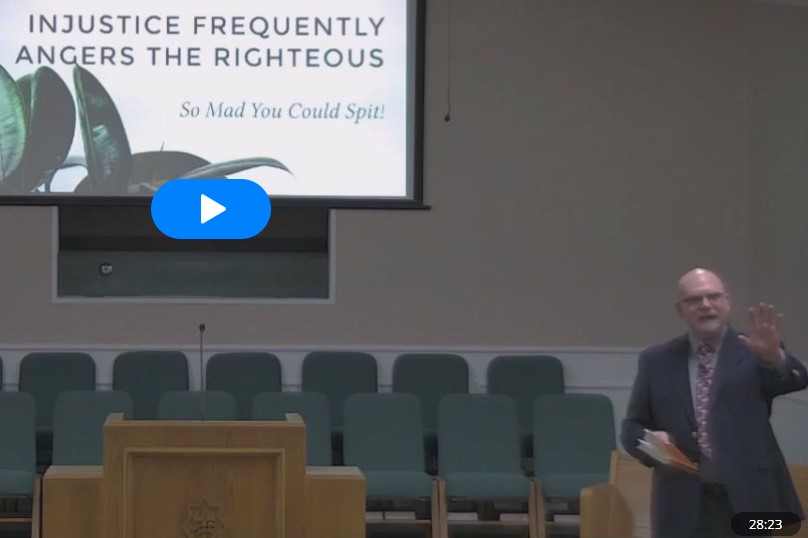
Psalm 58 is a Psalm about anger, about getting so mad that you could spit. (An idiom some might not know, but it means you are REALLY mad!) The psalmist sure is. He is mad. He is angry. First , he notes that injustice often surrounds us. The psalmist looked around him and saw injustice, just as many of us see injustice in our world around it makes us upset. Belarus has seen three months of protests against its Russian-backed president. Hundreds of thousands of angry protesters around the country, convinced the president rigged the election to retain his decades-long power, and thousands have been detained. Lebanon‘s people are frustrated and upset, struggling with economic devastation from its port explosion, political turmoil due to decades of government corruption, and a humanitarian crisis with 1.5 million Syrian refugees living in a nation of 6 million. The new Chinese security law has many Hong Kong citizens angry at the choice of serving prison sentences or fleeing their homeland. And China continues to mistreat its minority communities of Uighurs, Mongols, and Tibetans through “re-education,” even as it heightens tensions with India and Taiwan. In the U.S., protests have been ongoing for months. During the spring and summer, the deaths of several black Americans led to protests and marches against injustice, which devolved at times into riots and looting. Now, there is anger and concern about possible election fraud. among Trump supporters.
Injustice can be found throughout the world and the Psalmist is upset about it. In verses 1-2, he says the rulers claim to be impartial judges, that they are doing what’s right. But in reality, they devise injustice and bring violence. Unfortunately, when a man in Rochester, New York called 911 because his brother needed mental health assistance, the police placed a bag over his head and the man ultimately died. If mental health professional had been dispatched instead, the man may well be alive today. In both Belarus and Portland, authorities wearing masks were throwing protesters into unmarked vehicles. And in China, officials “re-educate” minorities to standarize them to the dominant Han Chinese culture–Uighur, Mongol, Tibetan . . . and sometimes Christian and other religious groups.
Verses 3-5 indicate these leaders are living a lie. They’re saying they are just when really they’re unjust. When it says they are wayward from birth and the womb, it is a poetic way of saying that injustice is second nature to them. It is routine. They are like a cobra who refuse to respond to the snake charmer, regardless of his skill. They are out of control; they don’t listen to counsel. They’re just angry and spitting their venom. Usually, the unjust are focused on their own desires and retention of power, not on the greater needs of the community.
Second, injustice frequently angers the righteous. They see what’s happening and they get upset about it. Often, they get angry. The psalmist cries out in verse 6, break their teeth out, tear out their fangs! That is pretty violent language. The Psalmist, however, is not calling on people to rise up and attack the unjust, to break some people’s teeth. No, the Psalmist is praying to God, expressing his frustration and anger to the Maker of the universe.
His prayer continues in verses 7-9, where he uses some imagery that probably seems strange to you–frankly because the Hebrew is rather difficult to understand, so we try to interpret it. What does seem clear is that these are curses on the unjust. He’s calling on God, asking him to curse these people, because he is upset. These curses, in some way or other, use the imagery of things that are disappearing, going away, or fading out. So his hope is that God will remove these injustices from around him, that the unjust would fade away. Water that flows away from you and vanishes is useless. It is no good. So he is saying, God make them useless. He speaks of arrows missing their mark. God, don’t let these people achieve their goals. Don’t let what they’re plotting come to be. When he says they are like slugs that seem to melt away, he seems to be referring to the slime trails that snails and slugs leave behind that eventually fade away. God, make their plans fade away or fall apart like those trails. The most disturbing of the images to modern readers is that of the stillborn child. The psalmist is asking God to not allow their plots to come to fruition. May their plots fail like the hopes of a parent are dashed with the death of a child still in the womb. Instead of joy, it brings sorrow. Finally, make the unjust like plants that are blown away by a violent wind before their thorns can wreak havoc, before they can destroy anything.
The psalmist records the prayers and thought of those who are dispossessed, those disenfranchised, those who are not in power. Today, there are minorities who are upset after years of being profiled, of being targeted. You can see statistics that show how they are pulled over far more frequently than a white person, and they’re just tired of it–especially when it results in an unnecessary death. Then there are the women both in Portland and Belarus who are out protesting. There is the wall of moms in Portland, women upset at the severity of police response to protesters who literally formed a wall between the protesters and the police. In Belarus, most of the protests and marches have been led by women, including a 73 year old great-grandmother who made international headlines because she’s out there every week, going up to the masked police who are arresting people and talking to them, asking them what their mother thinks of what they are doing. Even she has been detained at times by the unmarked vans. And there are the Lebanese people who rose up in protest, demanding the government step down because of the corruption resulting finally in the massive port explosion. These injustices frequently anger people and cause them to be upset.
Finally, while you may get angry about the injustice around you, the psalmist emphasizes that justice always belongs to the Lord. The psalm begins with a question, are you rulers really righteous? Are you really just? Are you doing what is right? It starts with a question, but it ends with a confession of faith. Surely there is a God who judges the Earth. You may look around and see injustice everywhere, but you can live by faith. There is hope that there is a God and that this God is a just God. He is a God who will not allow the plans of the wicked to always go on. The psalmist says in verse 11, because there is a God, the righteous are rewarded. He tells us in verse 10 that, because there is a God, the righteous rejoice when God avenges them. The gory imagery may upset you, but only because most moderns don’t live in a warrior culture. When it says the righteous dip their feet or wash their feet in the blood of the wicked, it is a victory image. It was a victory boast that to wash your feet in the blood of your enemy. If you could do so, it meant you had won the battle and survived. The image is that God will be victorious in the end. Those who are righteous will be on the side of God and so will be victorious with God.
The psalmist is describing a great upending of the world one day, just as in many of Jesus’ parables about the kingdom, there is an unexpected reversal of fortunes. The unjust rulers think they are powerful, that they are in the right with their use of power. But one day, the psalmist warns, the reign of the righteous God will burst in. God is going to bring justice. People who are oppressed will find liberation. Finally, the people who are mistreated will know for certain that God is a just God. But in the psalm, it is God who gets vengeance–not humans, not even the psalmist. This is what frustrates a lot of people watching the news. Sometimes peaceful protest turn violent when some individuals decide to take matters into their own hands. The psalm does not encourage this. It doesn’t encourage a protester to start burning buildings. It also doesn’t encourage someone against the protest to step on their accelerator and run people over. ‘That is, it is not telling you to take justice into your own hands because it makes us just as injust as those we seek to “right.”
What we’re called to is to pray to God and to trust that God will avenge. This is one of the songs that says it is written by David or that its “of” David. When you look at David’s life, he was chased by Saul, who was trying to be put to death. David had two opportunities where he could have killed Saul. David’s men said, God has given your enemy over to you! David, however, said, God is my Avenger. God will take care of this man. I’m not going to put him to death. So we are not called to take matters into our own hands. We are called to pray and trust in God. But this doesn’t mean you ignore injustice. It doesn’t mean you might not protest it or talk about it, but it does mean you don’t take matters into your own hands. You need to follow the way of Gandhi or follow the way of Martin Luther King Jr. You need to find ways to speak out against injustice. But you are not called to take up a sword to “create” justice (like many of the Charlie Hebdo incidents recently in Paris). James talked about this idea. He says, “My dear brothers and sisters, take note of this: Everyone should be quick to listen, slow to speak and slow to become angry, because human anger does not produce the righteousness that God desires” (1:19-20). It is okay sometimes to get angry. James never says don’t get angry, he just says to be careful how you deal with that anger. When you have anger, take it to God and pray about it, like the psalmist does. But don’t hop on social media and start blasting your thoughts to the world. God can handle it, your friends–not so much. (At the least, write it out and sit on it a bit before you post.) And as the situation requires, act for justice in non-violent ways.
Paul tells the Ephesians it is ok to be angry, but do not sin in your anger. Then he says a very wise thing, “Do not let the sun go down while you’re still angry, do not give the devil a foothold” (4:26-27). For a great number of things, the sun’s gone down; it is in the past. We need to quit worrying about it. If you hold onto it, if you don’t just put it away and get rid of it or take it to God, that’s when evil can arise, when the devil gets a foothold.
So give your anger to God and let him transform that anger into hope. That’s what happens in Psalm 58. The psalm starts with complaint, but it is to God. By the end, he’s talking to God and finding hope in God. He wrestles through that anger and gets through to the other side.
Subscribe to receive email notifications of new posts.
Some might say they trust their calculators, because they are always something they can count on. Others might not trust in stairs because they are always up to something! In all seriousness, in an age of social media–where fake news spreads at a rate of 6x the speed of real news and often real news is dismissed as “fake” because it doesn’t fit our narrative–how do we know who or what to trust? Psalm 146 shows us this issue is much older than the advent of social media. The psalmist is also very clear on who we should and should not trust.
First, the psalmist warns us about misplaced trust in human leaders. “Do not put your trust in princes, in human beings, who cannot save.” If you listen to the various news outlets or read the posts of your friends on social media, you would think presidents, senators, justices, and the like could save us. “This is the most important election of our lifetime!” Haven’t they been saying that every 2-4 years for a while now?! The president cannot save the United States. A Supreme Court justice cannot save us either. How long will Christians put their trust in the wrong places?
The psalmist tells us the hope we have in policies or promises that comes with such misplaced trust dies with the person. (Or in America, when they leave office . . . or worse, when they get elected or appointed.) The psalmist wanted to emphasize just how short-lived such trust is. He talked about the breath leaving the body and the body turning to dust. Such hope is just as ephemeral as a breath you cannot grasp; it crumbles just as dust slipping through your fingers. Now notice, the psalmist never says that leaders are not necessary or that they are useless. He simply emphasizes they are not our saviors and we shouldn’t act as if they are.
Second, the psalmist points to hopeful trust in God as our help. There is a transition that occurs in verse 5 with a beatitude. Happy is the person whose help is the God of Jacob. Notice it says “Jacob” and not what you would expect–“Israel” (Jacob’s later name). This subtle shift by the psalmist again emphasizes that we are not to trust in humans, for that type of hope is deceptive. (Jacob’s name means “deceiver.”) The beatitude elaborates, happy are those whose hope is in YHWH their God.
The hope is in the name of the God who made a covenant with his people precisely because he is faithful to the covenants he makes even when we humans fail on our end. Who is this God? Verse 6 tells us he is the powerful one, using the imagery of Genesis 1 to remind us he is the maker of heaven, the earth, the sea, and everything that resides in these spheres. Verse 10 tells us her is the permanent one, for his reign as eternal king is forever. But more important than his power or his permanence is that he is the faithful one. He is the one who keeps the faith even after every human leader dies and their plans (and our hopes in them) pass away.
Though he is the maker of heaven, earth, and the sea, to whom is he faithful? Who does he help and to whom does he bestow hope? Verses 7-9 tell us that it is to the ones that we might perceive to be lowly or even insignificant. It is the oppressed whose cause the Lord upholds. It is the hungry that he feeds and those who are bound that he liberates. It is the blind to whom he gives sight. It is those who bow down in humility that he lifts up and exalts.
The psalmist invokes the image of the righteous and the wicked. If God truly is the one who keeps the faith, then he must love the righteous and frustrate the ways of the wicked. Otherwise, “right” and “wrong” have no meaning and nothing in this world can be trusted, not even in God himself. Between the statements about God’s love for the righteous and his frustration of the ways of the wicked, we find three of the most vulnerable groups in the ancient world: the alien, the orphan, and the widow. They are the ones who normally live without hope in their circumstance. The alien has no clan or kinsman to protect him. The orphan has no family to watch over her. The widow has no husband to provide for her. But as the most significant statement of God loving the righteous and lifting up those bowed low–we are told that God watches over and sustains these most vulnerable members of society.
One last thing we might miss in English translations is a play of images through word choice. We are told that God “lifts up” those who are bent down by the cares of this world as well as those who voluntarily humble themselves in reverential submission. But when God encounters the wicked–the arrogant who take pride in their positions or stand tall in their sinful actions–God makes their ways “bent” (the image in the Hebrew word that we translate “frustrate). So great is his love for us and so faithful are his ways.
Third, we are called to a life of praise, that is, enacted trust. Five times we are called to praise. The psalm starts and ends with the exclamation, “Hallelujah!” (That is, “praise the Lord!”) The three other times (vv 1-2) define how we are to praise the LORD. We are to praise him with every part of our being (our “nephesh” translated “soul” in the NIV). We are to praise him throughout our life. We are to praise him continuously (so not just select parts of our life, but ever and always).
The prophet Amos tells us that true praise or worship of God is not through song or sacrifice. True praise is to live a life of justice and righteousness (5:21-24). Micah said it this way, we are to do justice, desire mercy, and to walk humbly with God (6:8). True worship of God is to love your neighbor as yourself (Lev 19:18). Occasionally, the Hebrew word translated “praise” can mean “shine,” which Jesus calls us to do. We are to be the light of the world, living out our faith in such a way as to lead others to glorify (that is, praise) our Father in heaven (Matt 5:16). Our vocation in this world is to be the “image of God” (Gen 1:27), so we should be living as we are told God acts in this psalm. We are to uphold the cause of the oppressed, give food to the hungry, set prisoners free, give sight to the blind, life up those bowed low, watch over foreigners, and sustain the fatherless and the widow (vv. 6-9). This is what we saw Jesus doing in his public ministry. It is also very close to Jesus’ description of those who will inherit the kingdom in the parable of the sheep and the goats.
In this election season, we must be careful not to run after politicians who promise us what we want to hear. We should consider whether their priorities are in line with the activity of God in this psalm. For God tells us in the book of Zechariah, it is “‘not by might nor by power, but by my Spirit,’ says the LORD Almighty” (4:6).
Subscribe to receive email notifications of new posts.
Psalm 113 is the first psalm in the Great Hallel of Passover (Pss 113-118). One thing that we find in the text is that we should exalt the LORD at all times. Because of the liberation of God’s people through the Passover, verse 1 describes the radical change that has occurred for the Hebrews. While in Egypt, they moaned and cried out because of oppression. Now, however, they shout “Hallelu Ya” (Praise the Lord)! Before the Passover, they were the servants of Pharaoh, but afterwards servants of the LORD. Three times in the text, there is an emphasis that the “name of the LORD” (YHWH) should be praised. To the Hebrews, the name was symbolic of someone’s character, so the praise the name was to shine a light on the character of the LORD. He is YHWH, the “I Am Who I Am” who fulfills his promises. At the burning bush, Moses is told that God is the I Am, the God of Abraham, Isaac, and Jacob, who will free the people and deliver them into the land promised to those ancestors. Because of who he is, we are to praise him now (whatever our current circumstances) and praise him forevermore. From the dawn to dusk, his name is to be praised (vv. 2-3).
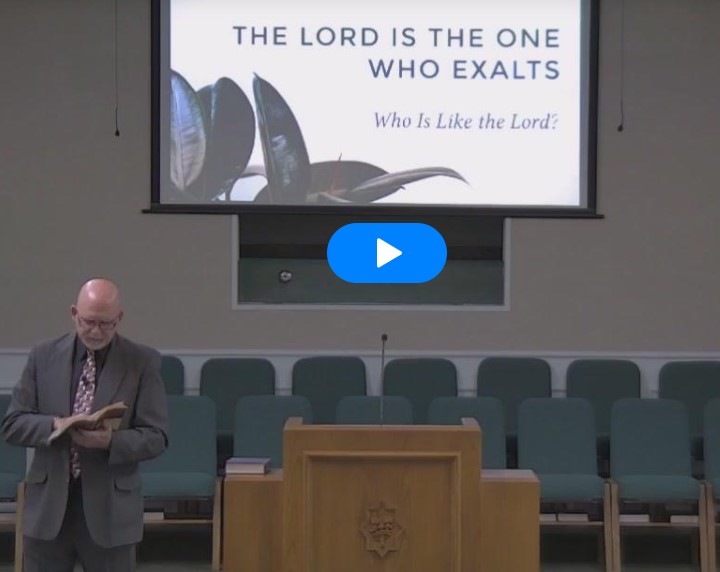
Another thing we find in the text is that the LORD is the Exalted One. He is over all the nations. There is no God like him. His glory is described as being not “in” the heavens but “above” them. Who is like him? He sits on high as King of the Universe (vv. 4-5). Yet this great and mighty God who dwells above the heavens humbles himself. We are told that he stoops down to look upon the heavens and the earth. What is it he searches for as he lowers himself (rather non-regally) to stoop and search the earth?
The text tells us that he does this because the LORD is the One who exalts. The surprising thing in verses 7-9 is that the object of his gaze are the poor and the childless. We are told he raises the poor from the dust and the needy from the dung hill (NIV, “ash heap”). He even puts the poor onto level ground with royalty. The psalm reminds us of the parable of Jesus about the rich man and Lazarus. The poor beggar Lazarus is exalted at the end of the story while the rich man is punished. In the ministry of Jesus, we find his care focused on the blind, the lame, the lepers, the tax collectors, the so-called “sinners” (as defined by the religious elites). He shows compassion to them but engages in debate and argument with the rich and powerful (both politically and religiously). The placement of the poor and the prince on level ground can also be seen in the selection by the Spirit of Jesus of two of the primary early Christian leaders–Paul, the well-educated Pharisaic rabbi, and Peter, the plain-spoken fisherman. Jesus places them on equal footing (or even places Peter a little above as he was selected for leadership much earlier than Paul).
The other object of God’s focus, as mentioned above, is the childless woman. She will be “settled” in her home “as” a happy mother. The text doesn’t promise she will be a mother, but God will bless her just as he blesses the woman with child. Still, the statement reminds us of the care the LORD has for the motherless wife–Sarah, Rachel, Samson’s mother, and Hannah most notably. In fact, some scholars have noted the similarities between words and phrases of this psalm and Hannah’s song in 1 Samuel 2. Both images (the poor being exalted and seated and the childless being settled and happy) are apt images for the Exodus. The slaves are liberated from poverty; the mothers who lost children find happiness.
This compassion for the lowly and exaltation of the humble is the story of Jesus. Paul tells us that Jesus, though he was in very nature God, did not grasp at equality with God but humbled himself to become a servant. (The God who stoops in Psalm 113 is the same humble God seen in Jesus.) Jesus lowers himself into the dirt and dung of human existence, even to the point of a violent and humiliating death on a Roman cross. But then God the Father exalted him! He gave him “the name” (mentioned three times in Psalm 113) that is “above” every name (as God is “above” the heavens) so that all tongues will confess “Jesus is LORD” (Hallelu Ya!), for the name above all names is the name YHWH, the LORD.
This is also the story of the Church. Paul tells us that God chose the foolish and the lowly in order to shame the wise and the powerful. His purpose in so doing was to make sure that no one could boast about themselves (that is, be arrogant). They could only praise him in humility. Praise the LORD!
Subscribe to receive email notifications of new posts.
What does it mean to be happy? Psalm 32 starts with two beatitudes (happy are . . .) and ends with an emphasis on rejoicing, being glad, and singing.
Instead of looking immediately at verses 1 and 2, however, let’s first look at the suffering of the sinner. Between the opening beatitudes and verse 5, which is connected to them, we find a description of the sinner in verses 3-4. “When I kept silent” (v. 3) reminds us of Adam in the Garden of Eden, silently hiding from God among the trees. Even when confronted, he wouldn’t confess his sin but blamed the woman and God himself. His refusal to speak aloud what separated him from God was what separated him from God. We must speak our sins, if for no other reason than we often don’t understand our actions until we attempt to put them into words.
When we keep silent, it might be because of our stubborn pride. It might be our fear of exposure and rejection. Or perhaps we trivialize the significance of our sin (for it is our “pet” sin). Ultimately, silence is a rejection of God’s grace by not seeking it. Maybe we think we are not worthy or don’t deserve his forgiveness. Perhaps we hypocritically try to hide the duplicitous nature of our life.
Whatever the reason, the psalmist says the sinner wastes away. Secret sin may bring us a fleeting pleasure, but it cannot bring us true happiness. The psalmist describes silence as destructive behavior–our bones waste away, our groans never end, we feel the heavy hand of God weighing down upon us, and our strength fades as in the excessive heat of the day.
But while the sinner suffers, there is forgiveness for the faithful. In verse 5 we find a dramatic shift. The psalmist says, “Then . . . ” No longer is the sinner silent. In fact, there is a triple construction emphasizing the confession of the repentant one.
True happiness is not found in secret sins but in a life laid bare. The two beatitudes at the start of the psalm also consist of a triple construction. Happy is the ones whose
Transgressions are forgiven
Sins are covered
Iniquity is not counted against them
As can be seen, verses 1-2 and 5 are connected by numerous words: transgression, sin, iniquity, covered, and forgiven. They are bookends around the silence of the sinner, surrounding it as evidence of the fuller life discovered by the one who repents. For when we confess, the Lord forgives, just as 1 John 1:9 tells us: “If we confess our sins, he is faithful and just and will forgive us our sins.” As James L. Mays says of this verse, “Confession of sin to God is confession of faith in God.” If we say we trust him, that we believe he is a God who is faithful and true to his covenant. Our confession should be, “I am a sinner, but you God, are gracious.”
Photo from imdb.com
The confession that brings forgiveness (v. 5) also brings happiness (vv. 1-2). Confession isn’t just about what we’ve done; it is about who God is. The second beatitude ends by saying, the spirit of the happy one has no deceit. 1 John 1:8-10 states the opposite: if we claim we have no sin we deceive ourselves and make God out to be a liar. Or, perhaps most frightening, we can “confess” our sins as a way to prove our own “righteousness”–never really understanding our sin and so never truly confessing. Frollo, in the Disney movie The Hunchback of Notre Dame, “confesses” his lust for Esmerelda while he is actually extolling his own righteousness. (The animators invoke the irony by juxtaposing him against the flames of his hearth, which increasingly resemble the flames of Hell). As Paul warns us, God’s grace is not an excuse to sin, as if we are helping God out by giving him an opportunity to forgive us (Rom 6:1).
Finally, the psalmist describes the deliverance of the devoted. Verse 9 tells us to not to be like the horse or mule–who draws near to God not willingly but only because a bit and bridle force it to do so. Instead, we should accept God’s instruction, for he gives it in love. As Jesus said, “Come to me all you who are weary and burdened, and I will give you rest . . . . For my yoke is easy and my burden is light” (Matt 11:28, 30)
When trials come, verses 6-7 tell us to pray to God, for he is a high rock above the chaotic waters (like Noah), a cave protecting us from trouble (like David), and the one who surrounds us with songs of deliverance (like Jehoshaphat). Woes await the wicked, who face turmoil within and trouble without, but God’s love surrounds the devoted (that is, those who trust in the Lord).
Who are the righteous? Who are the upright in heart? They are not the sinless, for only Jesus the Christ is sinless. They are the honest, the authentic, those who confess their sin freely and so do not harbor deceit in their spirit. They are those who trust God by crying out to him, not hiding from him or pretending all is okay. Proverbs 28:13 succinctly summarizes Psalm 32: “Whoever conceals their sins does not prosper, but the one who confesses and renounces them finds mercy.”
Subscribe to receive email notifications of new posts
Gloom, despair, and agony on me. Deep, Dark depression, excessive misery! If it weren’t for bad luck, I’d have no luck at all! Gloom, despair, and agony on me.
This farcical song of lament was popular on the television show Hee Haw while I was a kid in the 1970s. It reflects, however, the element of lament that is the most popular form of literature in the book of Psalms. There are times we cry out to God in desperation. Psalm 13 is one such passage.
The psalmist is dejected and confused in his time of despair. “How long?” he asks God four times. When will this end? As humans, we all have external struggles and troubles of life that begin to cause internal doubts as we wrestle with conflicting thoughts and eventually prompt spiritual concern about the presence of God and his lack of response to our prayers. The psalmist focuses on all three issues (external, internal, spiritual), but he inverts them and begins first and foremost with a prayerful address to God. His prayer is about his dread of God’s absence, his anxiety created by conflicting thoughts and emotions, and his fear of his enemy’s triumph. In our minds we can package these into nice little groupings of “external,” “internal,” and “spiritual,” but in reality, we are human. These fears and concerns are all intertwined and build upon and incite one another.
Second, the psalmist desperately cries out to God. It would be easy to claim God has abandoned us. If he is all loving, why does he allow my suffering? If he is just, why does he allow my enemy to overpower me? But we live in a broken and fallen world, not the fantasy of a thirty minute sitcom. Some struggles and problems are not quickly resolved. But the psalmist prays in the midst of his darkness. “How long?” he asks. “Look at me!” he demands. “Respond to me!” he pleads. He will not give up on God. He will not deny God but confesses his dependence of the Lord. Whether he overcomes his enemy or is destroyed, God has been and will remain, “my God!”
Finally, the psalmist is determined to be committed. There is a shift in the psalm to an emphasis on trusting God in the midst of the storm. He will trust in God’s steadfast love–the love evidenced time and again through the history of the Israelite people. He will rejoice in God’s salvation even when he doesn’t presently see it. He will sing of the bounty God has blessed him with even when it isn’t in all the fullness he would wish.
Because of God’s faithfulness in the past, the psalmist refuses to accept a present apart from God or imagine the future apart from God’s salvation. Martin Luther said of Psalm 13 that it is “the state in which hope despairs, and yet despair hopes at the same time; and all that lives is ‘the groaning that cannot be uttered’ wherewith the Holy Spirit makes intercession for us, brooding over the waters shrouded in darkness.” Or, as the man in desperation cried out to Jesus, “I do believe; help me overcome my unbelief!” (Mk 9:24, NIV). In the midst of desperation, we have hope because Christ. On the cross he felt abandoned by God yet he entrusted his spirit to his Father; he felt betrayed by the humans he had come to save but asked his Father to forgive them. And he trusted his Father would raise him back to life even when all hope seemed lost. So our hope in in Christ. “For we who are alive are always being given over to death for Jesus’ sake, so that his life may also be revealed in our mortal body” (2 Cor 4:11, NIV).
19th Century preacher Charles Spurgeon and a friend, walking through the English countryside, came across a barn and stood looking at the weather vane on top. It read “God is Love.” Spurgeon said he did not think it was appropriate to put such a statement on a weather vane, for the vane is quite changeable but God’s love is unchanging. His friend, however, told him he misunderstood the meaning of the farmer. The weather vane stated a truth: no matter which way the wind might blow, God . . . IS . . . love! It doesn’t matter if a cool breeze indicates a good season or happy time, or hot winds bring desolation or a dry period, or a ferocious gale points toward a chaotic and stormy period in your life. God is love, and Christ is our guide pointing the way through.
Subscribe to receive email notifications of new posts
Always give yourselves fully to the work of the Lord, because you know that your labor in the Lord is not in vain. — 1 Corinthians 15:58, NIV
The U.S. holiday of Labor Day began in the late 1800s, at the height of the Industrial Revolution. At the time, the average American worked 12 hours/day, 7 days/week to make a basic living. Children as young as 5 or 6 often worked in mills, factories, and mines because employers could hire them for a fraction of the cost of an adult worker. Working conditions for both children and adults was often very unsafe. Long hours and children are, in fact, the focus of Psalm 127, to which we will turn in a minute.
In the late 19th century, labor unions became more vocal, organizing protest rallies and strikes. In today’s language, they would have been emphasizing “Workers Lives Matter.” Most protests were peaceful, like the 10,000 workers in New York who took unpaid leave on the first Monday of September 1882 to march from City Hall to Union Square, creating the first Labor Day parade in the United States. At times, protests erupted into violence by protesters and/or the police and troops assigned to maintain order. The Haymarket Incident in 1886 resulted in the death of several Chicago police and workers. The Pullman Strike of 1894, which lasted over two months, resulted in more than a dozen worker deaths at the hands of federal troops. Soon after, Congress, in order to repair ties with the American worker, passed a law recognizing Labor Day as a federal holiday.
As we consider Psalm 127, we see that, without the Lord, our labor is in vain. Three times in the first two verses, the psalmist reiterates the phrase “in vain.” Whether building a house, standing guard over a city, or engaging in daily labor–all is in vain unless our work is within the Lord’s greater work. Even if we rise early and do not eat the bread earned from our “painful toil” until late in the evening (v. 2), our work is in vain if we view it as the goal or the end itself, our purpose for living. Perhaps that is why the psalmist shifts gears in the rest of the psalm to speak of children (vv. 3-5). The psalmist says children also are “from the Lord.” (Note that he doesn’t say children are “in vain” apart from God, so family or relationships are, at the very least, a “better” end or goal.) Yet whether we speak of our physical labor or the labor of bearing children–our lives find their ultimate meaning when they are in the Lord.
A second thing we find in the psalm is that, with the Lord, Eden’s curse is undone. Again, verse 2 speaks of the bread of “painful toil.” The Hebrew (עֵצֶב) describing the bread has the same root word that we find in the curses spoken in Genesis 3:16-17. After humans ate the fruit of the tree of the knowledge of good and evil, God pronounced the land cursed so that the man had to work the ground with painful toil for the food he would eat. Childbirth was cursed so that the woman brought forth her children with painful toil. And so here, we find work (vv. 1-2) and children (vv. 3-5) as the twin themes of the psalm.
But in the psalm, we find that the Lord grants sleep to those who love him. This sleep is juxtapositioned with the sleeplessness of the person who works in vain apart from the Lord. It is also apposed to the guards who “stand watch” as the Hebrew term (שָׁקַד) carries the idea of “wakeful” or “sleepless.” For those who trust God, they are blessed with productive sleep in place of unproductive and unending toil. While they continue to engage in hard work, it is not their end. They do not worry about the outcome but find their rest in the Lord. We find the same idea in Proverbs 10:22, “The blessing of the Lord brings wealth, without painful toil for it” and Jesus’ promise, “Come to me, all you who are weary and burdened, and I will give you rest. My yoke is easy and my burden is light” (Matt 11:30).
In the psalm, the Lord gives children by the handful or quiverful (v. 4-5), specifically “sons.” To have many sons in the ancient world was important. They provided strength in potential times of conflict or negotiation (cf. v. 5). They brought respect in life and welfare in old age to the parents. They were also a way for your legacy to extend beyond your physical death. In verse 3, these children are called “fruit of the womb,” harkening back to the first commandment given to humans to “be fruitful and multiply” (Gen 1:28). Psalm 128, the companion to Psalm 127, picks up on this fruit imagery, calling one’s food the “fruit of your labor,” one’s wife “a fruitful vine,” one’s children “olive shoots,” and ending with a prayer that one sees “your children’s children” (that is, to see the olive shoots become fruit-bearing trees). So when humans chose their own way in Eden, God pronounced a curse describing what this life outside the Lord’s will would be like. Psalm 127, however, speaks of Eden’s curse being undone for those who seek to live “in the Lord.” (Perhaps this is why Paul emphasizes being “in Christ” so frequently.)
Finally, we are called to trust the Lord in all areas of our life. Reading through the psalm, we find that it is the Lord who builds, the Lord who watches, the Lord who gives sleep, and the Lord who grants children. That said, we must understand that the psalmist is speaking in corporate terms. He surely was aware that not all work is productive nor all marriages fertile. Yet even in these individual times of drought, we are called to trust the Lord with all areas of our lives.
The psalm’s superscription identifies it as a “song of ascents,” most likely a song to be sung by pilgrims as they traveled to and from Jerusalem for festivals. If this was its purpose, then the “house” becomes the temple, the “city” becomes Jerusalem, and the “sons” become either the sons of David (the kings) or the nation as a whole. This helps us see yet again that we are called to trust the Lord in all areas of our life–our religious life (the house), our political life (the city), our vocational life (toil for bread), and our family life (children). Trusting God in all areas of our life is described in Psalm 128 as the “fear of the Lord.” Paul, writing to Timothy, called it hope. “That is why we labor and strive, because we have put our hope in the living God, who is the Savior of all people, and especially of those who believe” (1 Tim 4:10). This Labor Day, make sure your work is within the Lord’s work so that you can rest knowing that your labor is not in vain.
Subscribe to receive email notifications of new posts






 Orthopistis